Femathon Platonic Fem Relationship Recommendations

I’ll be co-hosting Femathon in March; come join in! Check out the other posts in this series because I have a lot more recommendations for this category that aren’t directly listed here.

Looking for a modern, witchy YA fairytale? Check out The Near Witch by V.E. Schwab. I absolutely adore this book. And, fun fact, the hardback reprint has a built in ribbon book mark – the original might have one too, but I’m not really sure since I don’t personally have a copy of the first edition. This could also count in Fem Positive and Fems Fight Back.

The Near Witch is only an old story told to frighten children. 

If the wind calls at night, you must not listen. The wind is lonely, and always looking for company. 

And there are no strangers in the town of Near.

These are the truths that Lexi has heard all her life. 

But when an actual stranger-a boy who seems to fade like smoke-appears outside her home on the moor at night, she knows that at least one of these sayings is no longer true.

The next night, the children of Near start disappearing from their beds, and the mysterious boy falls under suspicion. Still, he insists on helping Lexi search for them. Something tells her she can trust him.

As the hunt for the children intensifies, so does Lexi’s need to know-about the witch that just might be more than a bedtime story, about the wind that seems to speak through the walls at night, and about the history of this nameless boy.

Part fairy tale, part love story, Victoria Schwab’s debut novel is entirely original yet achingly familiar: a song you heard long ago, a whisper carried by the wind, and a dream you won’t soon forget. 

– Goodreads Book Blurb

Does a middle grade novel about a girl whose best friend is a ghost count as a platonic fem relationship? I think so. If you’ve like the show Ghost Whisperer then you’re sure to like City of Ghosts by Victoria Schwab. Also if you take the dust jacket off of the hardcover you’ll find an adorable cat motif pressed into the cover. Did I mention this is part of a trilogy which finishes coming out this year? This could also count in Fem Positive and Fems Fight Back.

Cassidy Blake’s parents are The Inspecters, a (somewhat inept) ghost-hunting team. But Cass herself can REALLY see ghosts. In fact, her best friend, Jacob, just happens to be one.

When The Inspecters head to ultra-haunted Edinburgh, Scotland, for their new TV show, Cass—and Jacob—come along. In Scotland, Cass is surrounded by ghosts, not all of them friendly. Then she meets Lara, a girl who can also see the dead. But Lara tells Cassidy that as an In-betweener, their job is to send ghosts permanently beyond the Veil. Cass isn’t sure about her new mission, but she does know the sinister Red Raven haunting the city doesn’t belong in her world. Cassidy’s powers will draw her into an epic fight that stretches through the worlds of the living and the dead, in order to save herself.

– Goodreads Book Blurb

The cover of this book really says it all. A Wizard’s Guide to Defensive Baking by T. Kingfisher is a gloriously dark and moody middle grade novel about a wizard whose magic only applies to baked goods. If a somewhat sentient sourdough starter that helps save the day sounds like a good time, you should totally give this book a try. This could also count in Fem Positive and Fems Fight Back.

Fourteen-year-old Mona isn’t like the wizards charged with defending the city. She can’t control lightning or speak to water. Her familiar is a sourdough starter and her magic only works on bread. She has a comfortable life in her aunt’s bakery making gingerbread men dance.

But Mona’s life is turned upside down when she finds a dead body on the bakery floor. An assassin is stalking the streets of Mona’s city, preying on magic folk, and it appears that Mona is his next target. And in an embattled city suddenly bereft of wizards, the assassin may be the least of Mona’s worries… 

– Goodreads Book Blurb

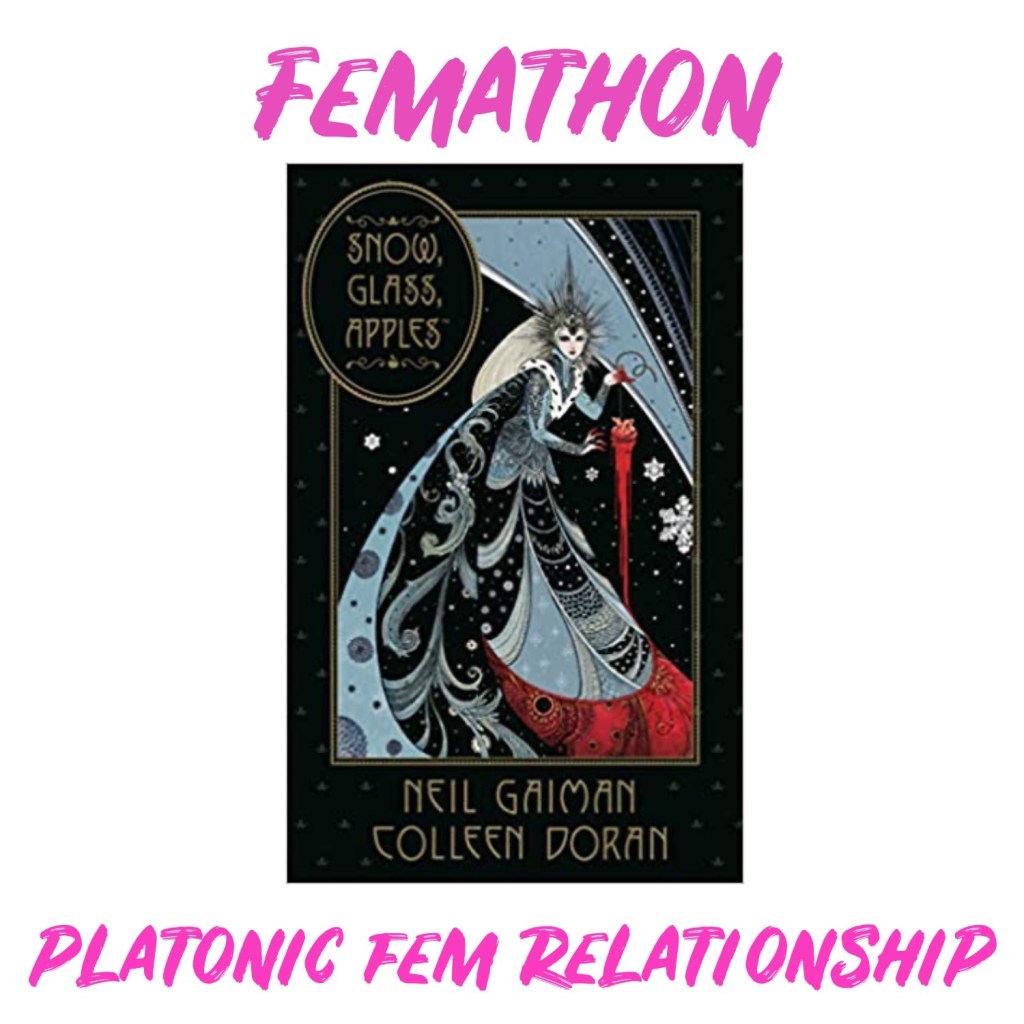
Colleen Doran’s graphic novel adaptation of Snow, Glass, Apples is STUNNING. Imagine a horror retelling of Snow White, but it’s told from the step-mother’s perspective.

A chilling fantasy retelling of the Snow White fairy tale by bestselling creators Neil Gaiman and Colleen Doran.

A not-so-evil queen is terrified of her monstrous stepdaughter and determined to repel this creature and save her kingdom from a world where happy endings aren’t so happily ever after.

– Goodreads Book Blurb

I already gushed enough about The Broken Earth trilogy by N.K. Jemisin over on my post on Fem Positive recommendations. The Stone Sky is the third book in this series – just read them all. You need to.

I would say Pet by Akwaeke Emezi is by far one of my all time favorite magical realism with a dash of horror and social commentary YA novels. Check the content warnings before you get into it (I still don’t pick up on a lot of that sort of stuff yet to give you an all-encompassing warning). This could also count in BIPOC Rep, LGBTQIA+, and Fems Fight Back.

Pet is here to hunt a monster.
Are you brave enough to look?

There are no more monsters anymore, or so the children in the city of Lucille are taught. With doting parents and a best friend named Redemption, Jam has grown up with this lesson all her life. But when she meets Pet, a creature made of horns and colours and claws, who emerges from one of her mother’s paintings and a drop of Jam’s blood, she must reconsider what she’s been told. Pet has come to hunt a monster, and the shadow of something grim lurks in Redemption’s house. Jam must fight not only to protect her best friend, but also to uncover the truth, and the answer to the question — How do you save the world from monsters if no one will admit they exist?

– Goodreads Book Blurb

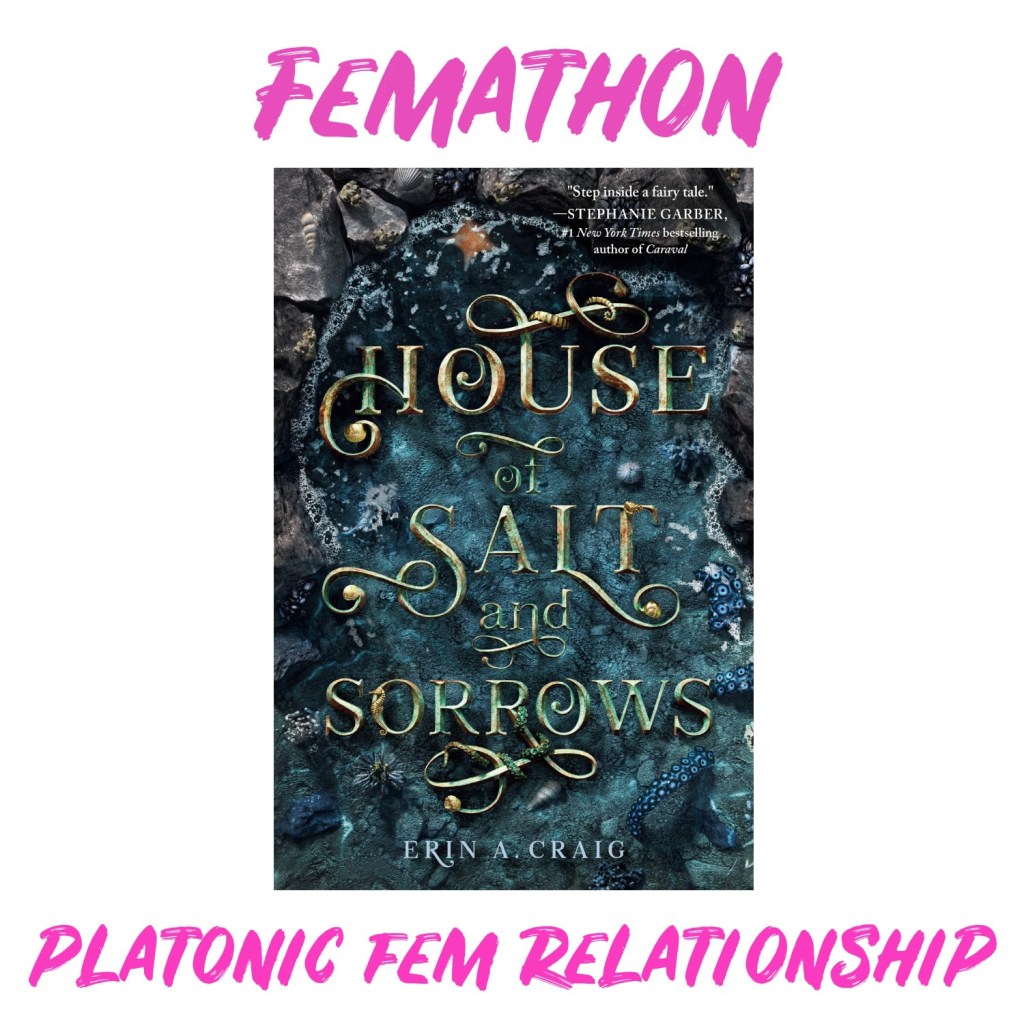
House of Salt and Sorrows by Erin A. Craig – a Twelve Dancing Princesses YA retelling? Yes, please! This could also count in Fem Positive and Fems Fight Back.

In a manor by the sea, twelve sisters are cursed.

Annaleigh lives a sheltered life at Highmoor, a manor by the sea, with her sisters, their father, and stepmother. Once they were twelve, but loneliness fills the grand halls now that four of the girls’ lives have been cut short. Each death was more tragic than the last—the plague, a plummeting fall, a drowning, a slippery plunge—and there are whispers throughout the surrounding villages that the family is cursed by the gods.

Disturbed by a series of ghostly visions, Annaleigh becomes increasingly suspicious that the deaths were no accidents. Her sisters have been sneaking out every night to attend glittering balls, dancing until dawn in silk gowns and shimmering slippers, and Annaleigh isn’t sure whether to try to stop them or to join their forbidden trysts. Because who—or what—are they really dancing with?

When Annaleigh’s involvement with a mysterious stranger who has secrets of his own intensifies, it’s a race to unravel the darkness that has fallen over her family—before it claims her next.

– Goodreads Book Blurb

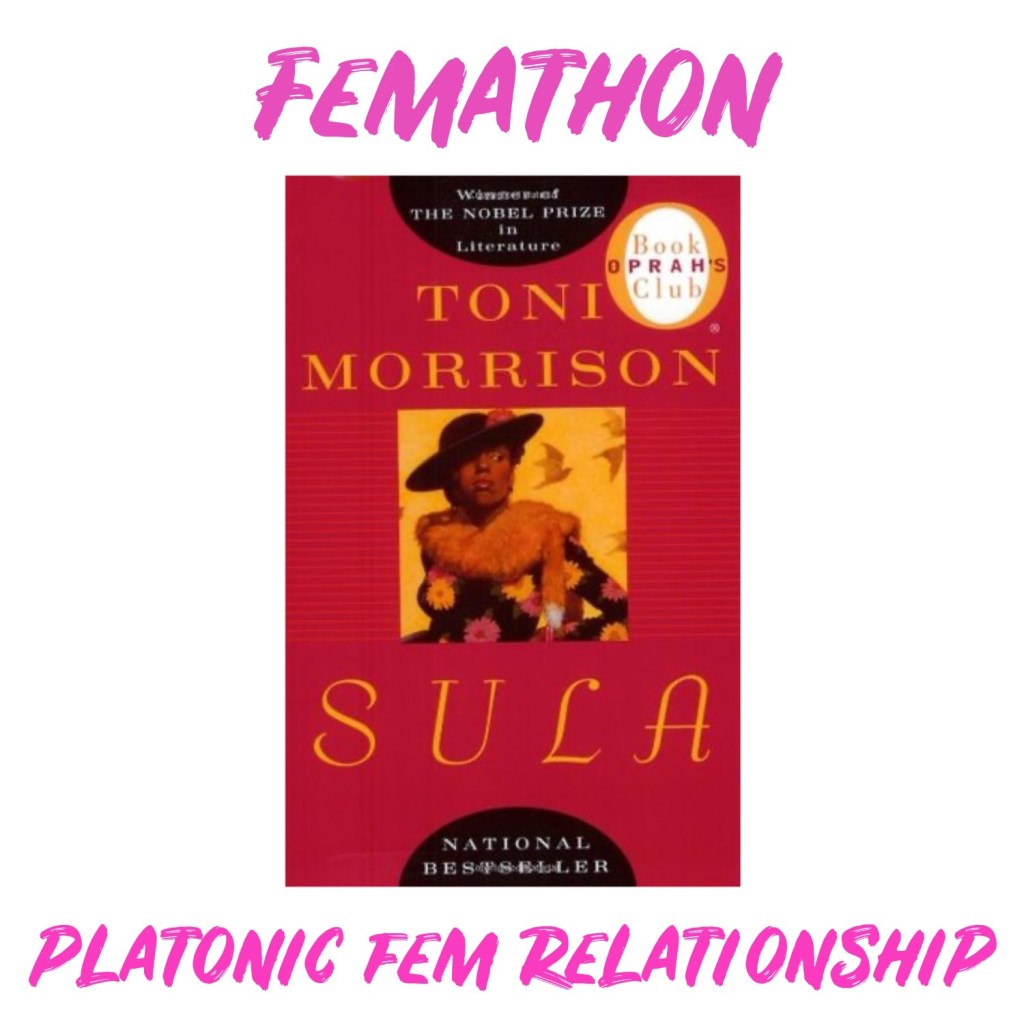
Sula by Toni Morrison is another book I found out about through an Ink and Paper Blog video. I think this could be considered as a modern classic, but I’m not sure what other categories this might fall under since I haven’t read it yet.

This rich and moving novel traces the lives of two black heroines from their close-knit childhood in a small Ohio town, through their sharply divergent paths of womanhood, to their ultimate confrontation and reconciliation.

Nel Wright has chosen to stay in the place where she was born, to marry, raise a family, and become a pillar of the black community. Sula Peace has rejected the life Nel has embraced, escaping to college, and submerging herself in city life. When she returns to her roots, it is as a rebel and a wanton seductress. Eventually, both women must face the consequences of their choices. Together, they create an unforgettable portrait of what it means and costs to be a black woman in America.

– Goodreads Book Blurb

Did any of these books spark your interest? What are you reading in March? 💜

Femathon LGBTQIA+ Recommendations

I’ll be co-hosting Femathon in March; come join in! This might be the only recommendations post I’ll be making where I’ve actually read every single book on the list … LoL yay? I’m also giggling right now because “Sissy That Walk” by RuPaul started playing on the radio as I’m writing this post.

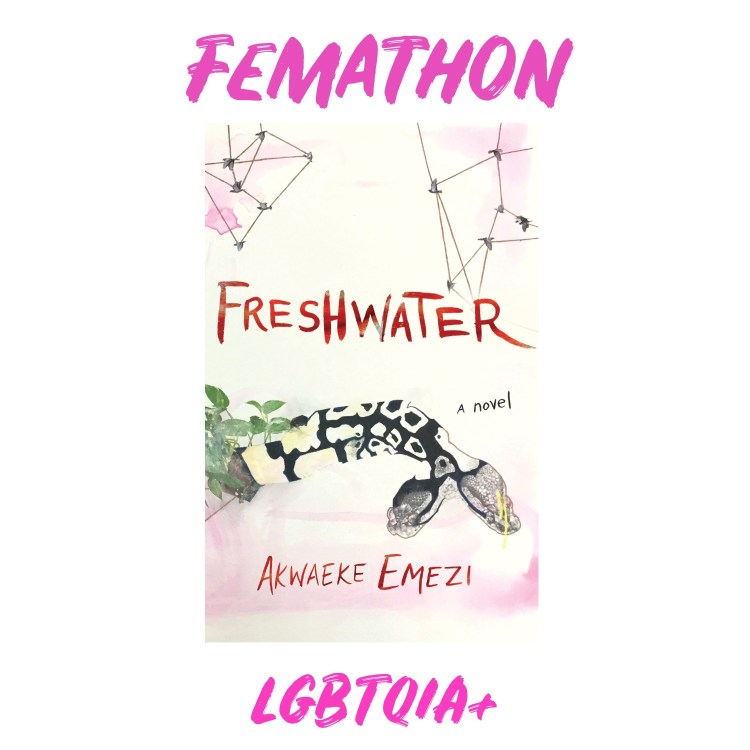
Definitely check the content warnings for this one before picking it up because it features rape. This book also features identity exploration and mental health. If you like audiobooks, it’s narrated by the author – which is pretty neat. You may notice this non-binary author pop up again in another one of my recommendation posts, because I’ve really been enjoying their writing. Freshwater by Akwaeke Emezi could also be used in Fem Positive, BIPOC Rep, Platonic Fem Relationship, and Fems Fight Back.

An extraordinary debut novel, Freshwater explores the surreal experience of having a fractured self. It centers around a young Nigerian woman, Ada, who develops separate selves within her as a result of being born “with one foot on the other side.” Unsettling, heartwrenching, dark, and powerful, Freshwater is a sharp evocation of a rare way of experiencing the world, one that illuminates how we all construct our identities.

Ada begins her life in the south of Nigeria as a troubled baby and a source of deep concern to her family. Her parents, Saul and Saachi, successfully prayed her into existence, but as she grows into a volatile and splintered child, it becomes clear that something went terribly awry. When Ada comes of age and moves to America for college, the group of selves within her grows in power and agency. A traumatic assault leads to a crystallization of her alternate selves: Asụghara and Saint Vincent. As Ada fades into the background of her own mind and these selves–now protective, now hedonistic–move into control, Ada’s life spirals in a dark and dangerous direction.

Narrated by the various selves within Ada and based in the author’s realities, Freshwater dazzles with ferocious energy and serpentine grace, heralding the arrival of a fierce new literary voice.

– Goodreads Book Blurb

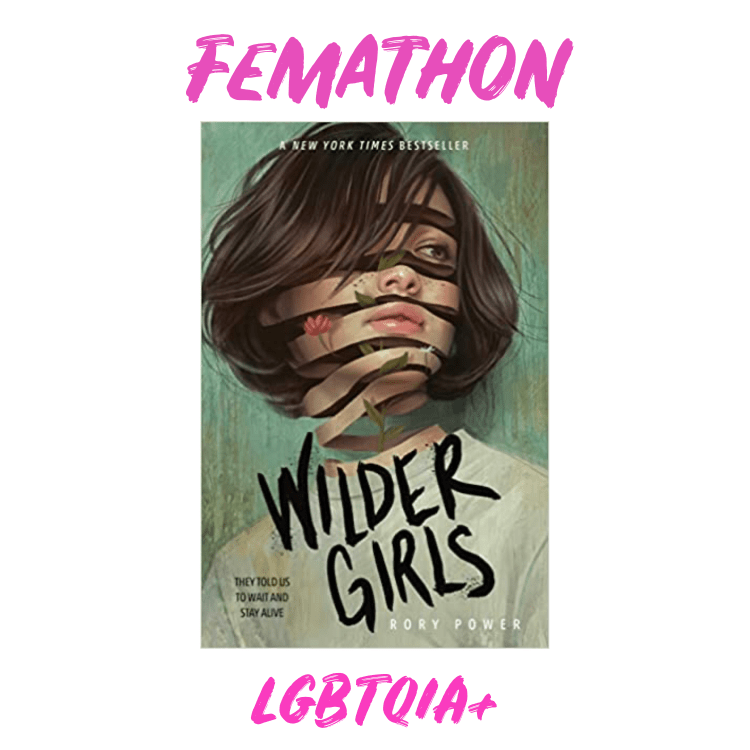
I first read this YA book in 2019 and made a video about it; I still love the cover art and distinctly remember the story beats in Wilder Girls by Rory Power. Think SciFi/Magical Realism meets Dystopian at a boarding school with some queer girls. Also, whoever started the rumor that this is a feminist twist on Lord of the Flies is very wrong. This is a queer horror/thriller that stars female protagonists. The only thing it has remotely in common with Lord of the Flies is that there are boats and people on an island. This could also count in Fem Positive and Fems Fight Back.

It’s been eighteen months since the Raxter School for Girls was put under quarantine. Since the Tox hit and pulled Hetty’s life out from under her.

It started slow. First the teachers died one by one. Then it began to infect the students, turning their bodies strange and foreign. Now, cut off from the rest of the world and left to fend for themselves on their island home, the girls don’t dare wander outside the school’s fence, where the Tox has made the woods wild and dangerous. They wait for the cure they were promised as the Tox seeps into everything.

But when Byatt goes missing, Hetty will do anything to find her, even if it means breaking quarantine and braving the horrors that lie beyond the fence. And when she does, Hetty learns that there’s more to their story, to their life at Raxter, than she could have ever thought true.

– Goodreads Book Blurb

So I kinda made a whole video review about The Priory of the Orange Tree by Samantha Shannon … I personally didn’t enjoy it much, but if you liked Christopher Paolini’s The Inheritance Cycle (Eragon et al) you’ll probably like this epic fantasy. This could also count in Fem Positive and Fems Fight Back.

A world divided. A queendom without an heir. An ancient enemy awakens.

The House of Berethnet has ruled Inys for a thousand years. Still unwed, Queen Sabran the Ninth must conceive a daughter to protect her realm from destruction – but assassins are getting closer to her door. 

Ead Duryan is an outsider at court. Though she has risen to the position of lady-in-waiting, she is loyal to a hidden society of mages. Ead keeps a watchful eye on Sabran, secretly protecting her with forbidden magic.

Across the dark sea, Tané has trained to be a dragonrider since she was a child, but is forced to make a choice that could see her life unravel.

Meanwhile, the divided East and West refuse to parley, and forces of chaos are rising from their sleep.

– Goodreads Book Blurb

So Across the Green Grass Fields by Seanan McGuire is actually the 6th (and presumably final book?) in her Wayward Children’s Series, but it is marketed as a standalone, and I would agree. If you want a middle grade story about a trans girl being transported to a world with centaurs and unicorns then you need to pick up this book. My only complaint about this series is I wish they weren’t novellas. This could also count in Fem Positive and Fems Fight Back.

“Welcome to the Hooflands. We’re happy to have you, even if you being here means something’s coming.”

Regan loves, and is loved, though her school-friend situation has become complicated, of late.

When she suddenly finds herself thrust through a doorway that asks her to “Be Sure” before swallowing her whole, Regan must learn to live in a world filled with centaurs, kelpies, and other magical equines―a world that expects its human visitors to step up and be heroes.

But after embracing her time with the herd, Regan discovers that not all forms of heroism are equal, and not all quests are as they seem… 

– Goodreads Book Blurb

I think The Long Way to a Small, Angry Planet by Becky Chambers is one of the first books I picked up after my 10 year reading hiatus and I’M SO GLAD I DID. In fact I might re-read it this year. The audiobook is fabulous. If you’re looking for a light-hearted space opera about found-family. you need to read this. This could also count in Fem Positive and Fems Fight Back.

Rosemary Harper doesn’t expect much when she joins the crew of the aging Wayfarer. While the patched-up ship has seen better days, it offers her a bed, a chance to explore the far-off corners of the galaxy, and most importantly, some distance from her past. An introspective young woman who learned early to keep to herself, she’s never met anyone remotely like the ship’s diverse crew, including Sissix, the exotic reptilian pilot, chatty engineers Kizzy and Jenks who keep the ship running, and Ashby, their noble captain.

Life aboard the Wayfarer is chaotic and crazy—exactly what Rosemary wants. It’s also about to get extremely dangerous when the crew is offered the job of a lifetime. Tunneling wormholes through space to a distant planet is definitely lucrative and will keep them comfortable for years. But risking her life wasn’t part of the plan. In the far reaches of deep space, the tiny Wayfarer crew will confront a host of unexpected mishaps and thrilling adventures that force them to depend on each other. To survive, Rosemary’s got to learn how to rely on this assortment of oddballs—an experience that teaches her about love and trust, and that having a family isn’t necessarily the worst thing in the universe.

– Goodreads Book Blurb

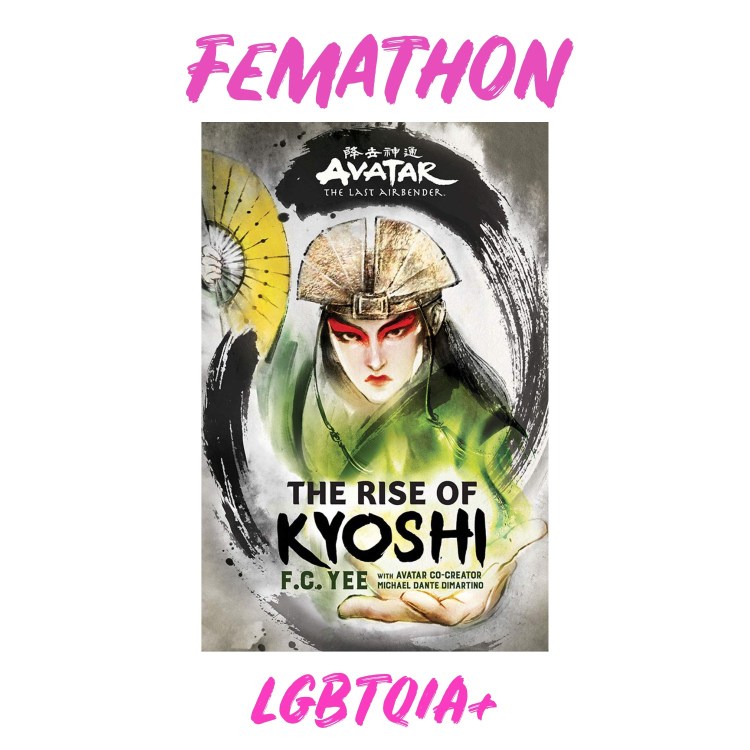
I talked about the second book in the Kyoshi duology in my 2020 favorites video. If you’re not acquainted with Avatar the Last Airbender The Rise of Kyoshi does a great job of introducing the world of the Avatar. If you’re already familiar, this is a great lore expansion on the series. This could also count in Fem Positive and Fems Fight Back.

F. C. Yee’s The Rise of Kyoshi delves into the story of Kyoshi, the Earth Kingdom–born Avatar. The longest-living Avatar in this beloved world’s history, Kyoshi established the brave and respected Kyoshi Warriors, but also founded the secretive Dai Li, which led to the corruption, decline, and fall of her own nation. The first of two novels based on Kyoshi, The Rise of Kyoshi maps her journey from a girl of humble origins to the merciless pursuer of justice who is still feared and admired centuries after she became the Avatar.

– Goodreads Book Blurb

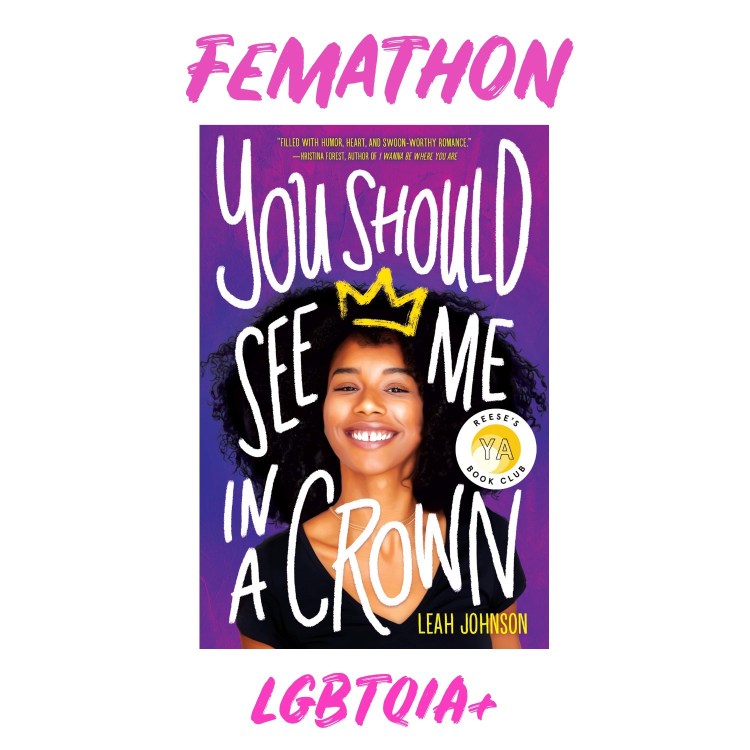
I just need to say that I NEED a sequel to this book that follows Liz to college. You Should See Me in a Crown is a fun YA Contemporary followins Liz on her quest to win the title of Prom Queen which comes with a scholarship. This could also count in Fem Positive, BIPOC Rep, and Fems Fight Back. (and possibly Disability/Neurodiversity since it also features sickle cell anemia representation)

Liz Lighty has always believed she’s too black, too poor, too awkward to shine in her small, rich, prom-obsessed midwestern town. But it’s okay — Liz has a plan that will get her out of Campbell, Indiana, forever: attend the uber-elite Pennington College, play in their world-famous orchestra, and become a doctor.

But when the financial aid she was counting on unexpectedly falls through, Liz’s plans come crashing down . . . until she’s reminded of her school’s scholarship for prom king and queen. There’s nothing Liz wants to do less than endure a gauntlet of social media trolls, catty competitors, and humiliating public events, but despite her devastating fear of the spotlight she’s willing to do whatever it takes to get to Pennington.

The only thing that makes it halfway bearable is the new girl in school, Mack. She’s smart, funny, and just as much of an outsider as Liz. But Mack is also in the running for queen. Will falling for the competition keep Liz from her dreams . . . or make them come true?

– Goodreads Book Blurb

The book blurb for These Witches Don’t Burn by Isabel Sterling is gloriously accurate at setting the stage for what to expect in this YA Fantasy. If you get attached to characters you might want to keep a handkerchief around. This could also count in Fem Positive, Platonic Fem Relationship, and Fems Fight Back.

Hannah’s a witch, but not the kind you’re thinking of. She’s the real deal, an Elemental with the power to control fire, earth, water, and air. But even though she lives in Salem, Massachusetts, her magic is a secret she has to keep to herself. If she’s ever caught using it in front of a Reg (read: non-witch), she could lose it. For good. So, Hannah spends most of her time avoiding her ex-girlfriend (and fellow Elemental Witch) Veronica, hanging out with her best friend, and working at the Fly by Night Cauldron selling candles and crystals to tourists, goths, and local Wiccans. 

But dealing with her ex is the least of Hannah’s concerns when a terrifying blood ritual interrupts the end-of-school-year bonfire. Evidence of dark magic begins to appear all over Salem, and Hannah’s sure it’s the work of a deadly Blood Witch. The issue is, her coven is less than convinced, forcing Hannah to team up with the last person she wants to see: Veronica.

While the pair attempt to smoke out the Blood Witch at a house party, Hannah meets Morgan, a cute new ballerina in town. But trying to date amid a supernatural crisis is easier said than done, and Hannah will have to test the limits of her power if she’s going to save her coven and get the girl, especially when the attacks on Salem’s witches become deadlier by the day.

– Goodreads Book Blurb

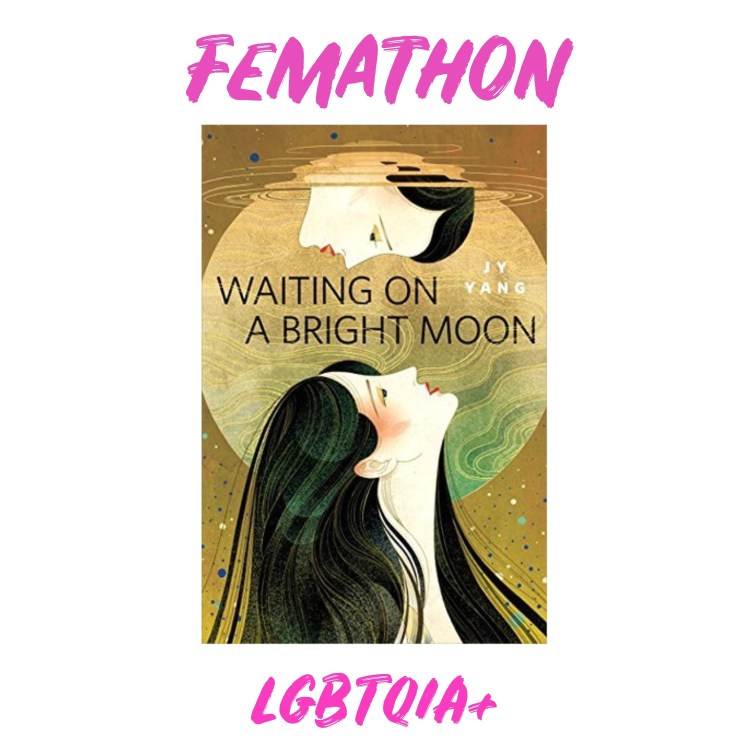
Waiting on a Bright Moon is the first book/novella I’ve read by J.Y. Yang who is known for their Tensorate series which I now have sitting on my digital TBR. I can’t really tell you much more than the book blurb without spoiling it since it is only a 41 page story, so if you’re looking for a short book to fill out your roster and/or more non-binary voices then check this out. It could also count in Fem Positive, BIPOC Rep, and Fems Fight Back.

Xin is an ansible, using her song magic to connect the originworld of the Imperial Authority and its far-flung colonies— a role that is forced upon magically-gifted women “of a certain closeness”. When a dead body comes through her portal at a time of growing rebellion, Xin is drawn deep into a station-wide conspiracy along with Ouyang Suqing, one of the station’s mysterious, high-ranking starmages.

– Goodreads Book Blurb

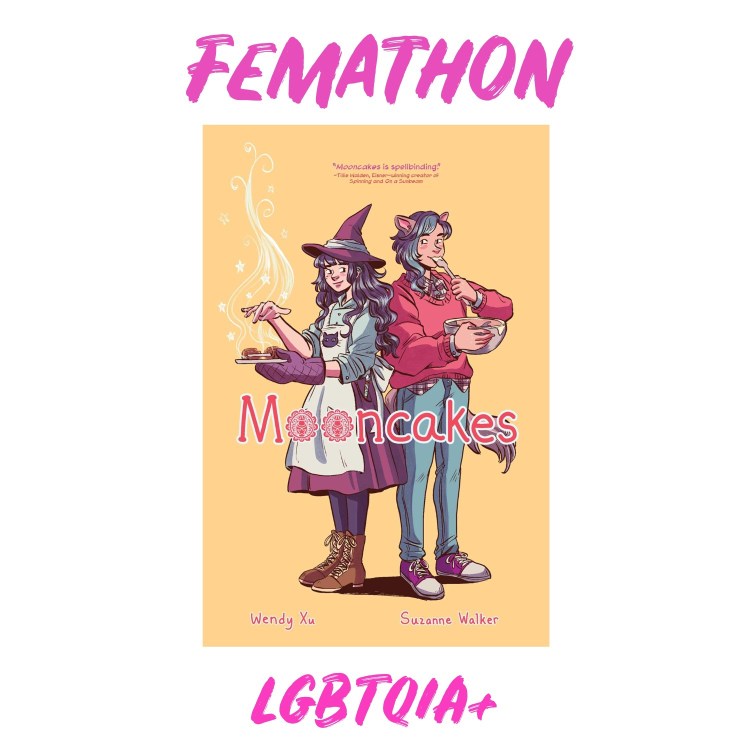
You want a cute, magical YA graphic novel? Pick up Mooncakes by Suzanne Walker and Wendy Xu. I’m not aware of this story getting a sequel/series, but I really want that to be a thing. This could also count in Fem Positive and Platonic Fem Relationship.

A story of love and demons, family and witchcraft.

Nova Huang knows more about magic than your average teen witch. She works at her grandmothers’ bookshop, where she helps them loan out spell books and investigate any supernatural occurrences in their New England town.

One fateful night, she follows reports of a white wolf into the woods, and she comes across the unexpected: her childhood crush, Tam Lang, battling a horse demon in the woods. As a werewolf, Tam has been wandering from place to place for years, unable to call any town home.

Pursued by dark forces eager to claim the magic of wolves and out of options, Tam turns to Nova for help. Their latent feelings are rekindled against the backdrop of witchcraft, untested magic, occult rituals, and family ties both new and old in this enchanting tale of self-discovery.

– Goodreads Book Blurb

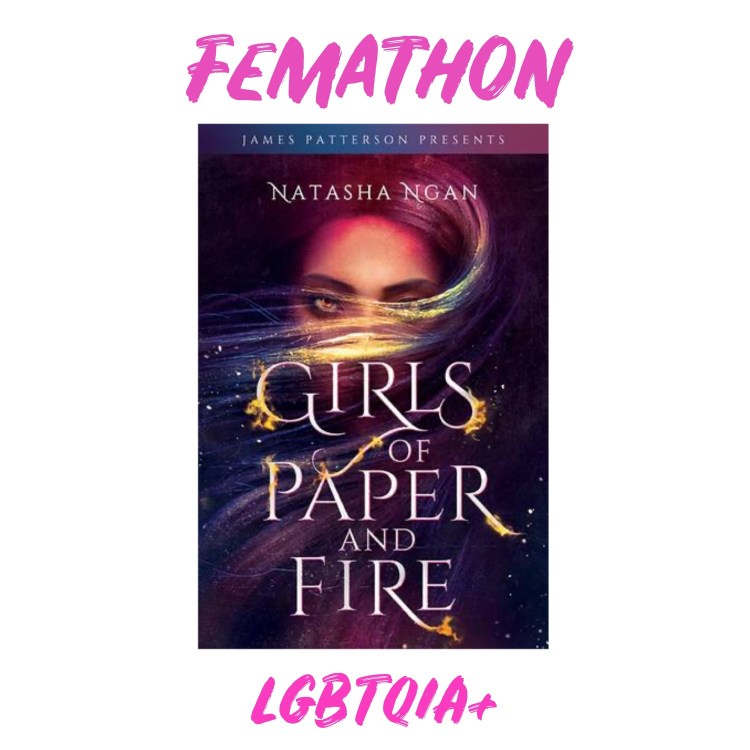
So I originally found out about this series because someone recommended it to me since Natasha Ngan is an author with Ehlers-Danlos Syndrome who writes YA Fantasy. Girls of Paper and Fire was just ok~ to me. I’m more of a story first, romance second type of reader usually, and this series in the reverse of that. But, hey, maybe you’ll like it more than me? Check the content warnings before you get into it though. This could also count as Fems Fight Back.

Each year, eight beautiful girls are chosen as Paper Girls to serve the king. It’s the highest honor they could hope for…and the most demeaning. This year, there’s a ninth. And instead of paper, she’s made of fire.

In this richly developed fantasy, Lei is a member of the Paper caste, the lowest and most persecuted class of people in Ikhara. She lives in a remote village with her father, where the decade-old trauma of watching her mother snatched by royal guards for an unknown fate still haunts her. Now, the guards are back and this time it’s Lei they’re after — the girl with the golden eyes whose rumored beauty has piqued the king’s interest.

Over weeks of training in the opulent but oppressive palace, Lei and eight other girls learns the skills and charm that befit a king’s consort. There, she does the unthinkable — she falls in love. Her forbidden romance becomes enmeshed with an explosive plot that threatens her world’s entire way of life. Lei, still the wide-eyed country girl at heart, must decide how far she’s willing to go for justice and revenge.

– Goodreads Book Blurb

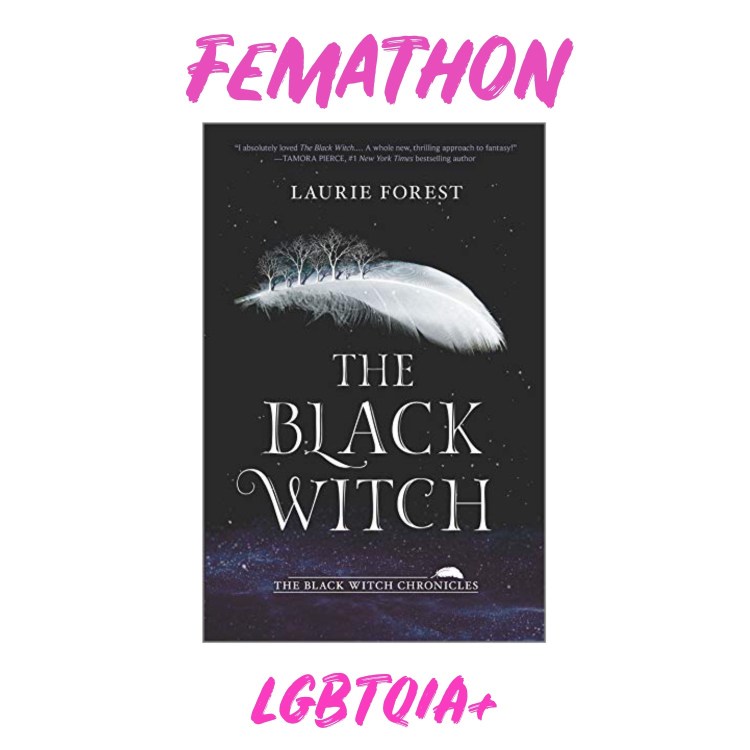
Sometimes I just want to read something with lots of Fey stuff and equal parts college teen angst – that’s a good chunk of what The Black Witch Chronicles by Laurie Forest is. There is a lot of social commentary in this series regarding religion, government, queer rights, racism (in a Fey setting), and possibly more that I’m forgetting to list off. I’ve currently read all of the series that is out at the time of this being written (February 2021), so I don’t distinctly remember which books discuss which topics – so just join me in reading the whole thing? This could also count in Fem Positivity and Fems Fight back.

A new Black Witch will rise…her powers vast beyond imagining.

Elloren Gardner is the granddaughter of the last prophesied Black Witch, Carnissa Gardner, who drove back the enemy forces and saved the Gardnerian people during the Realm War. But while she is the absolute spitting image of her famous grandmother, Elloren is utterly devoid of power in a society that prizes magical ability above all else.

When she is granted the opportunity to pursue her lifelong dream of becoming an apothecary, Elloren joins her brothers at the prestigious Verpax University to embrace a destiny of her own, free from the shadow of her grandmother’s legacy. But she soon realizes that the university, which admits all manner of people—including the fire-wielding, winged Icarals, the sworn enemies of all Gardnerians—is a treacherous place for the granddaughter of the Black Witch.

As evil looms on the horizon and the pressure to live up to her heritage builds, everything Elloren thought she knew will be challenged and torn away. Her best hope of survival may be among the most unlikely band of rebels…if only she can find the courage to trust those she’s been taught to fear.

– Goodreads Book Blurb

Tell me all of you LGBTQIA+ recommendations! Have you read any of the books on this list?

Femathon BIPOC Rep Recommendations

I’ll be co-hosting Femathon in March; come join in! Some of these books I’ll be talking about I have read, and some of them are on my TBR. If you check out the other Femathon recommendations I’ve made for this series (some of which have yet to be published on this blog when this post goes live – if you want a sneak preview check out my Instagram @thebookishsock) you’ll see several other books that could be part of this list as well.

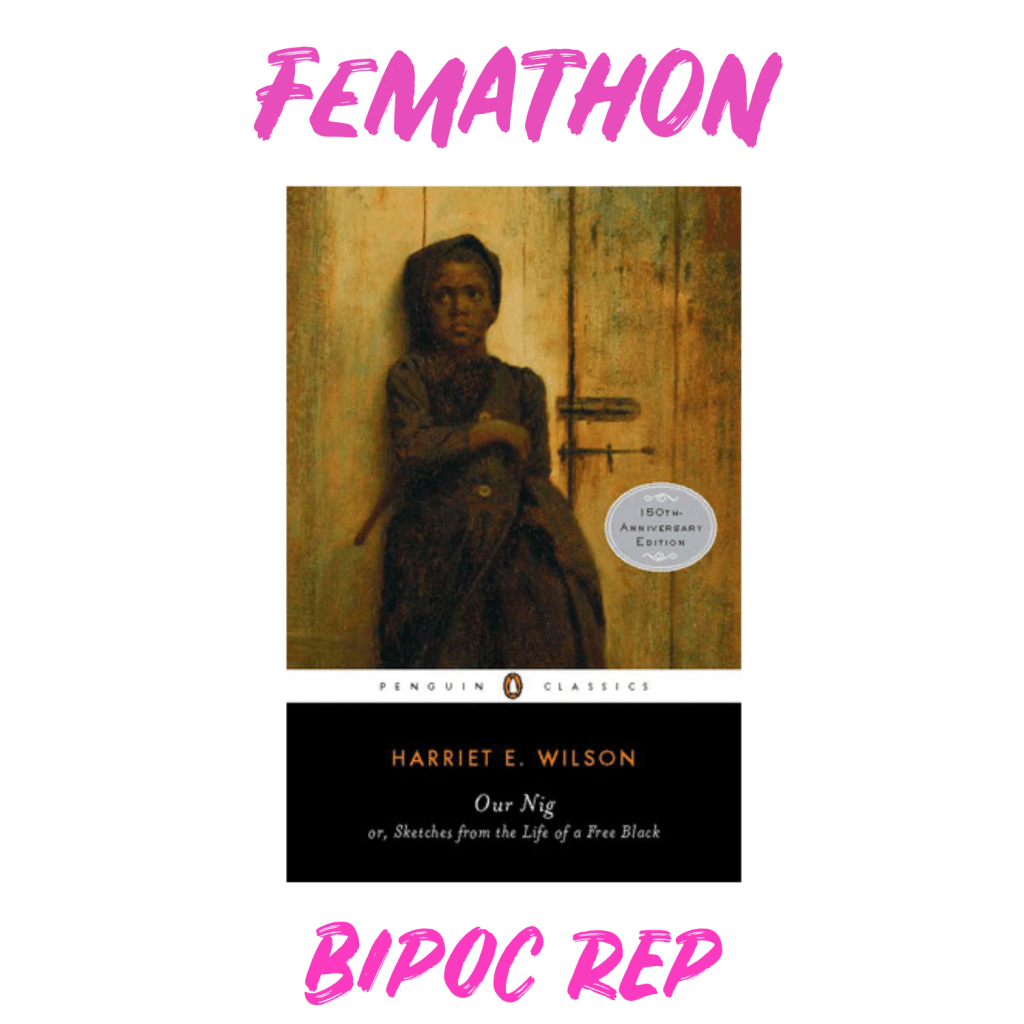
When I was looking up classics recommendations this is one of the books that came up. If you’re not Black and want to reference Our Nig by Harriet E. Wilson by voice I’d recommend substituting the word homie – since that’s a queue Danez Smith uses in their poetry book (where they then tell you the true name of the book is actually something else, but they’d prefer non-Black people to use homie instead; also if you’re looking for some non-binary poetry totally check them out). Alternatively, you could just say, “Our blank or, Sketches from the Life of a Free Black“. Aside from the BIPOC prompt, this could also count as a Classic, Platonic Fem Relationship, and possibly Fem Fights Back – I’m a little fuzzy on this one since I haven’t read it yet.

Our Nig is the tale of a mixed-race girl, Frado, abandoned by her white mother after the death of the child’s black father. Frado becomes the servant of the Bellmonts, a lower-middle-class white family in the free North, while slavery is still legal in the South, and suffers numerous abuses in their household. Frado’s story is a tragic one; having left the Bellmonts, she eventually marries a black fugitive slave, who later abandons her. 

– Goodreads Book Blurb

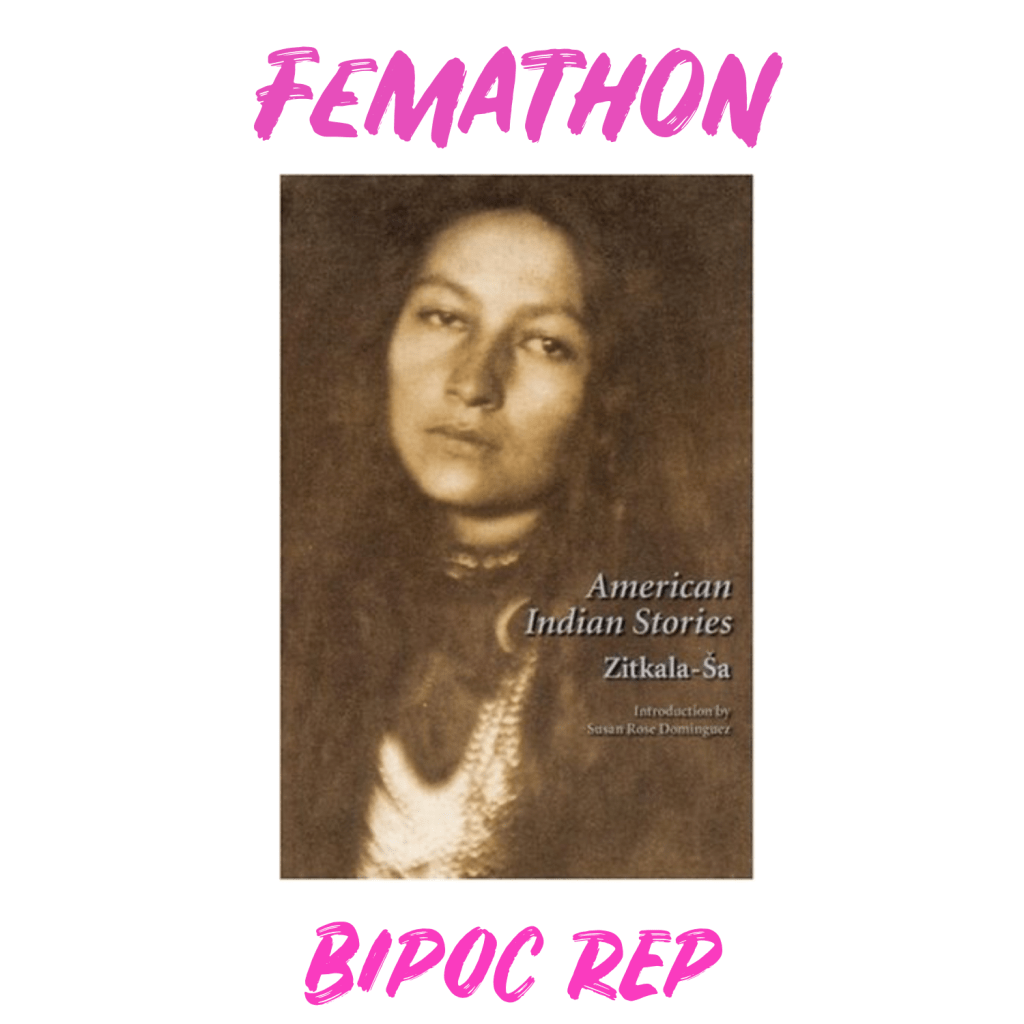
American Indian Stories by Zitkála-Šá is another book I found while looking for classics suggestions. This could also count for Fems Fight Back and possibly Non Fiction since there are childhood stories included – all for a possible total of 4 or 5 prompts if you want to also count Wildcard in.

American Indian Stories, first published in 1921, is a collection of childhood stories, allegorical fiction, and an essay, including several of Zitkála-Šá’s articles that were originally published in Harper’s Monthly and Atlantic Monthly.

One of the most famous Sioux writers and activists of the modern era, Zitkala-Sa (Gertrude Simmons Bonnin) recalled legends and tales from oral tradition and used experiences from her life and community to educate others about the Yankton Sioux. Determined, controversial, and visionary, she creatively worked to bridge the gap between her own culture and mainstream American society and advocated for Native rights on a national level. Susan Rose Dominguez provides a new introduction to this edition.

– Goodreads Book Blurb

Written in 1929 at the height of the Harlem Renaissance by one of the movement’s most important and prolific authors, Plum Bun is the story of Angela Murray, a young black girl who discovers she can pass for white. After the death of her parents, Angela moves to New York to escape the racism she believes is her only obstacle to opportunity. What she soon discovers is that being a woman has its own burdens that don’t fade with the color of one’s skin, and that love and marriage might not offer her salvation.

– Goodreads Book Blurb

I thought you might be getting tired of me saying this is another book I found while searching for classics recommendations, so for the rest of this post if I’m not directly saying otherwise right away it’s probably safe to say I haven’t read it yet. Plum Bun could also count as Classics, and Fem Fights Back.

First published to critical acclaim in 1929, Passing firmly established Nella Larsen’s prominence among women writers of the Harlem Renaissance.

Irene Redfield, the novel’s protagonist, is a woman with an enviable life. She and her husband, Brian, a prominent physician, share a comfortable Harlem town house with their sons. Her work arranging charity balls that gather Harlem’s elite creates a sense of purpose and respectability for Irene. But her hold on this world begins to slip the day she encounters Clare Kendry, a childhood friend with whom she had lost touch. Clare—light-skinned, beautiful, and charming—tells Irene how, after her father’s death, she left behind the black neighborhood of her adolescence and began passing for white, hiding her true identity from everyone, including her racist husband. As Clare begins inserting herself into Irene’s life, Irene is thrown into a panic, terrified of the consequences of Clare’s dangerous behavior. And when Clare witnesses the vibrancy and energy of the community she left behind, her burning desire to come back threatens to shatter her careful deception.

-Goodreads Book Blurb

Passing could also count in Classic and Platonic Fem Relationship, and possibly Fems Fight Back if you take into account when this was originally published.

Married as a child bride to a tenant farmer she never met, Rukmani works side by side in the field with her husband to wrest a living from a land ravaged by droughts, monsoons, and insects. With remarkable fortitude and courage, she meets changing times and fights poverty and disaster.

This beautiful and eloquent story tells of a simple peasant woman in a primitive village in India whose whole life is a gallant and persistent battle to care for those she loves—an unforgettable novel that “will wring your heart out” (The Associated Press).

Named Notable Book of 1955 by the American Library Association.

– Goodreads Book Blurb

You could also count this in Classic, and Fems Fight Back.

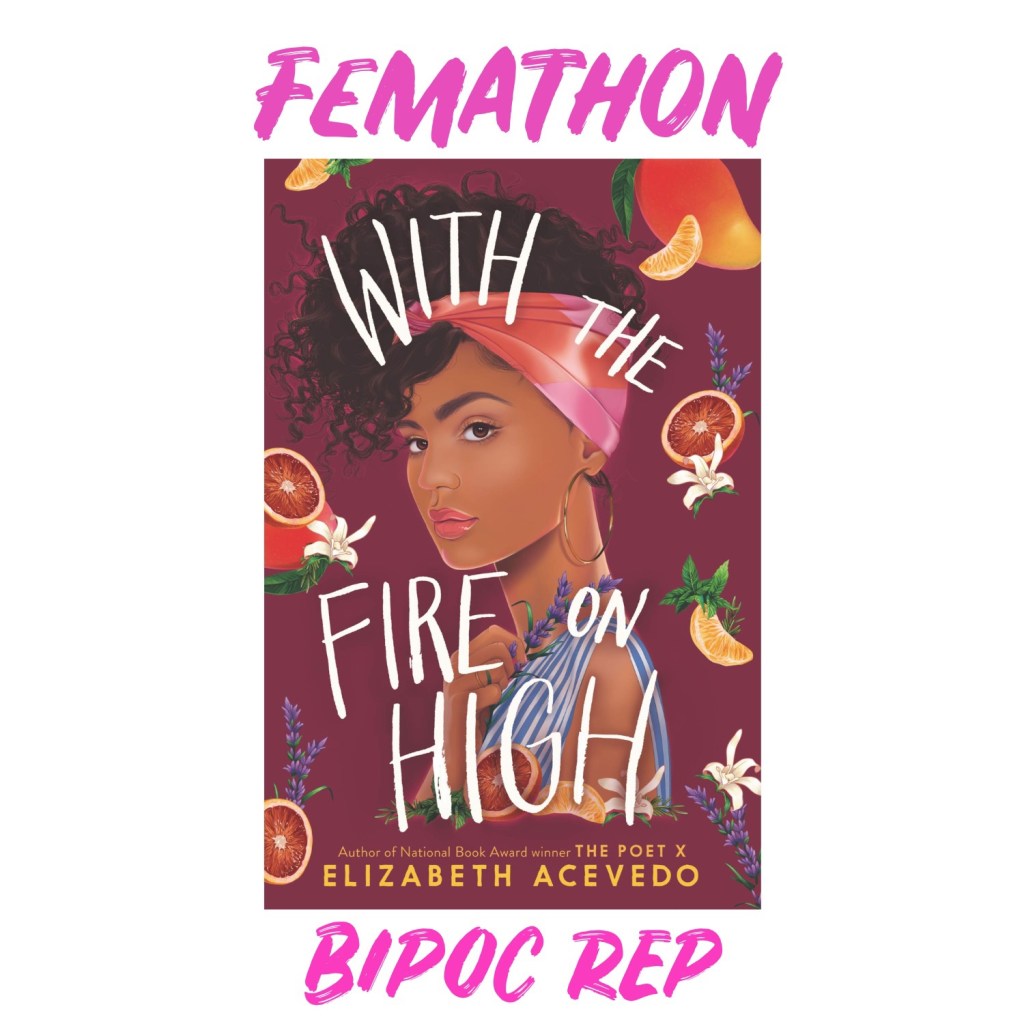
This is my favorite book by Elizabeth Acevedo so far (also any of her other books could be on this list too). This is a YA contemporary written rather like a memoir about a young, single mother in high school trying to make ends meet while pursuing her goals of becoming a professional chef. I happen to have this in the hardback edition and it is GORGEOUS with and without the dust jacket. Did I mention that there’s a sassy recipe at the beginning of some of the chapters? This could also count towards Fem Positive, Platonic Fem Relationship, and Fem Fights Back.

With her daughter to care for and her abuela to help support, high school senior Emoni Santiago has to make the tough decisions, and do what must be done. The one place she can let her responsibilities go is in the kitchen, where she adds a little something magical to everything she cooks, turning her food into straight-up goodness. Still, she knows she doesn’t have enough time for her school’s new culinary arts class, doesn’t have the money for the class’s trip to Spain — and shouldn’t still be dreaming of someday working in a real kitchen. But even with all the rules she has for her life — and all the rules everyone expects her to play by — once Emoni starts cooking, her only real choice is to let her talent break free.

– Goodreads Book Blurb

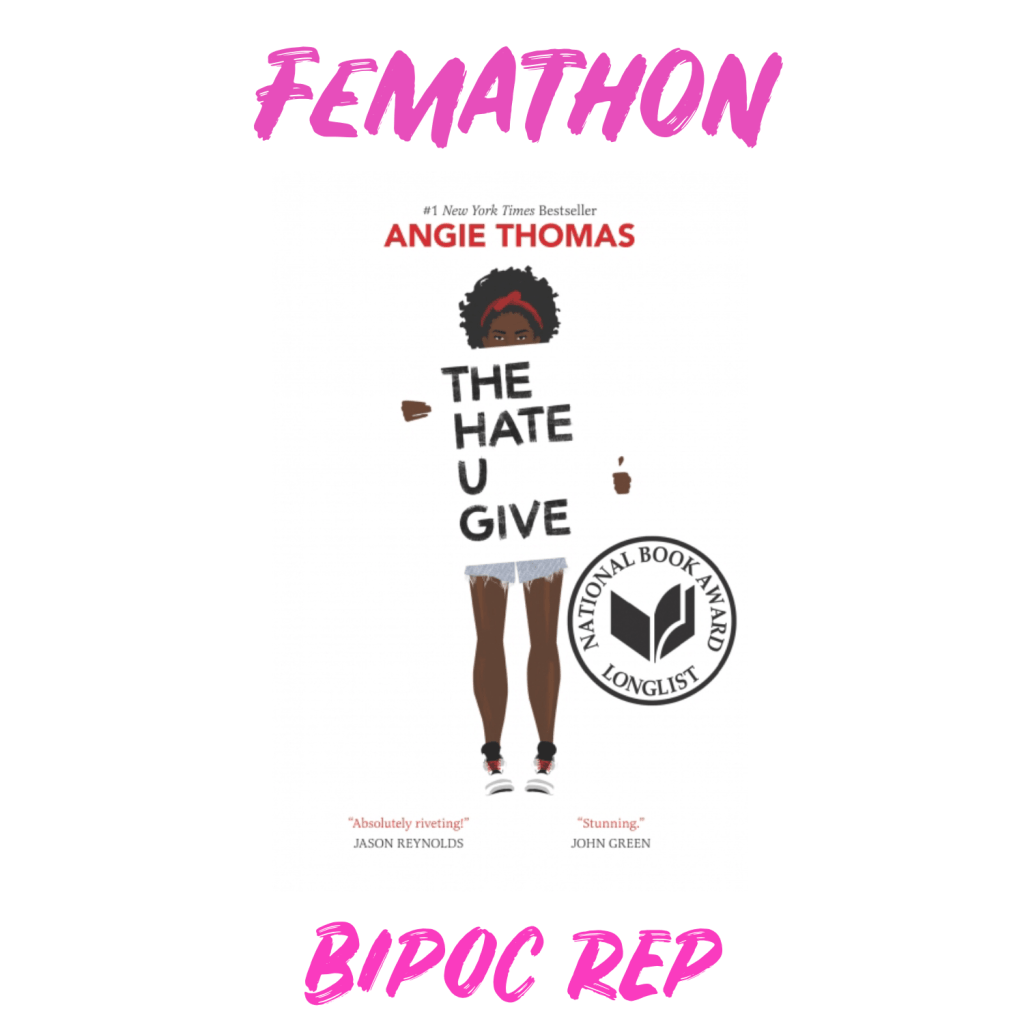
I know this book is SUPER popular, and you might be tired of seeing it, but there’s a reason it’s really popular. This is another YA contemporary that covers some incredibly complex topics while feeling somewhat like a memoir. This could also count as Fem Positive and Fem Fights Back.

Sixteen-year-old Starr Carter moves between two worlds: the poor neighborhood where she lives and the fancy suburban prep school she attends. The uneasy balance between these worlds is shattered when Starr witnesses the fatal shooting of her childhood best friend Khalil at the hands of a police officer. Khalil was unarmed.

Soon afterward, his death is a national headline. Some are calling him a thug, maybe even a drug dealer and a gangbanger. Protesters are taking to the streets in Khalil’s name. Some cops and the local drug lord try to intimidate Starr and her family. What everyone wants to know is: what really went down that night? And the only person alive who can answer that is Starr.

But what Starr does or does not say could upend her community. It could also endanger her life.

– Goodreads Book Blurb

I’ve read some of Ida B. Wells’ work before, but I don’t think I’ve read this version of her collected works, The Light of Truth: Writings of an Anti-Lynching Crusader. If you don’t know who Ida B. Wells is, you NEED to. I feel like most people know about Rosa Parks but not Ida Wells, and you really need to know about both of them. This could also count in Classics, Non Fiction, Fems Fight Back, and possibly Fem Positive (it’s been a while and my brain is rusty).

Seventy-one years before Rosa Parks’s courageous act of resistance, police dragged a young black journalist named Ida B. Wells off a train for refusing to give up her seat. The experience shaped Wells’s career, and—when hate crimes touched her life personally—she mounted what was to become her life’s work: an anti-lynching crusade that captured international attention.

This volume covers the entire scope of Wells’s remarkable career, collecting her early writings, articles exposing the horrors of lynching, essays from her travels abroad, and her later journalism. The Light of Truth is both an invaluable resource for study and a testament to Wells’s long career as a civil rights activist.

– Goodreads Book Blurb

As you might have already guessed, this could also count in Classics. I’m not sure what other categories this may count in, but it’s definitely on my TBR now.

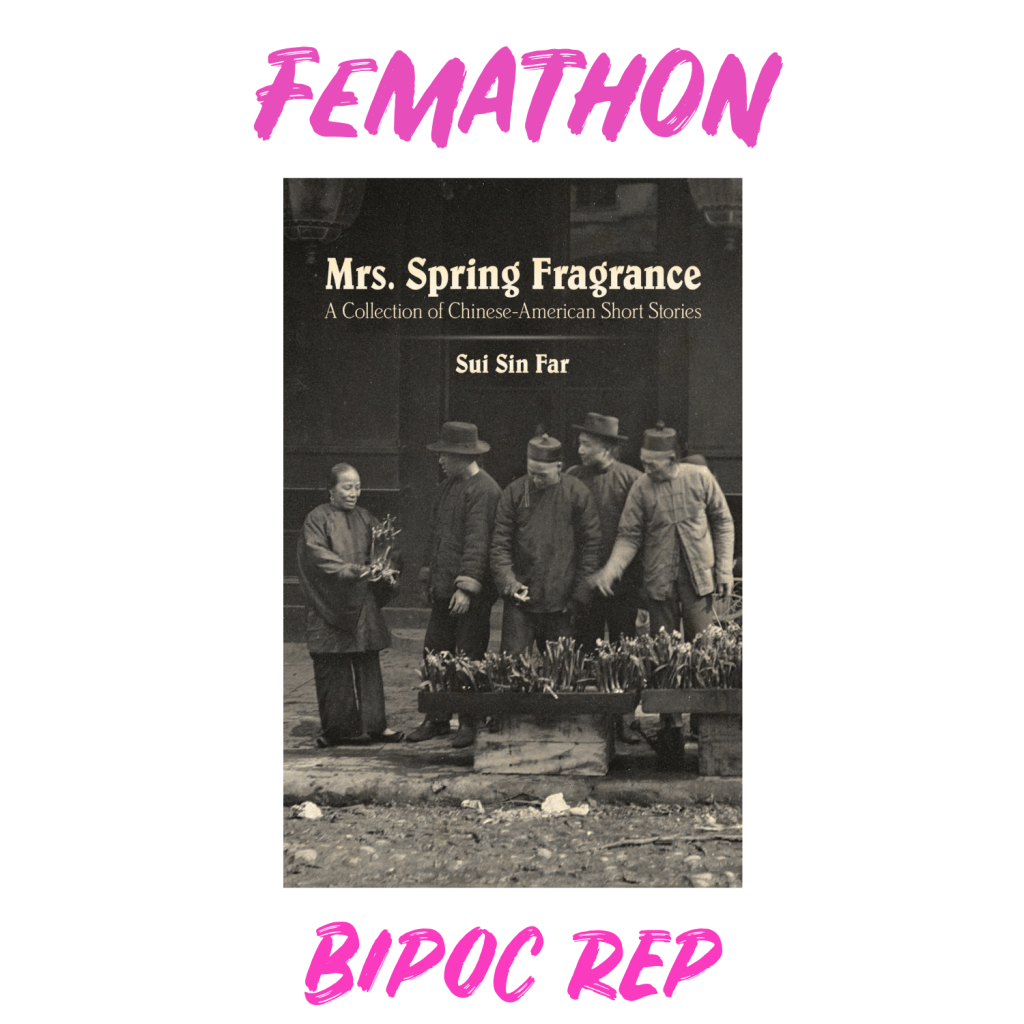
Mrs. Spring Fragrance was a popular short story collection by Sui Sin Far, pen name of Chinese-British-Canadian-American writer Edith Maude Eaton. The work is notable for being “the earliest book of fiction published in the United States by an author of mixed Chinese and white descent.” Although the stories in the collection were written in the late 19th and early 20th centuries, they were not compiled into a single book until 1912. The original publisher was A. C. McClurg and Company of Chicago. A new scholarly edition of the book, based on the McClurg edition, was released in October 2011 by Broadview Press.

The stories are divided into two halves, “Mrs. Spring Fragrance” for adults, and “Tales of Chinese Children” for children. Set in Seattle and San Francisco, they reflect the struggles and joys in the daily lives of Chinese families in North America. Particularly poignant are the stories delineating the cultural conflicts of Eurasians and recent immigrants. In “In the Land of the Free”, Eaton shows the suffering inflicted by discriminatory immigration laws.

– Wikipedia (because all of the other synopses on Goodreads I found kinda suck)

These next two recommendations I found out about after watching this Ink and Paper Blog Video. This could also count in Classic, Platonic Fem Relationship, Fems Fight Back, and possibly Fem Positive. This is another book on my TBR.

The Street tells the poignant, often heartbreaking story of Lutie Johnson, a young black woman, and her spirited struggle to raise her son amid the violence, poverty, and racial dissonance of Harlem in the late 1940s. Originally published in 1946 and hailed by critics as a masterwork, The Street was Ann Petry’s first novel, a beloved bestseller with more than a million copies in print. Its haunting tale still resonates today. 

– Goodreads Book Blurb

Check out that video link I left earlier to Ink and Paper Blog’s video for his synopsis since he’s read them and I haven’t. All I know is this also counts in Fem Positive, Fems Fight Back, and possibly more.

Two warring factions in the Department of Elevator Inspectors in a bustling metropolis vie for dominance: the Empiricists, who go by the book and rigorously check every structural and mechanical detail, and the Intuitionists, whose observational methods involve meditation and instinct. 

Lila Mae Watson, the city’s first black female inspector and a devout Intuitionist with the highest accuracy rate in the department, is at the center of the turmoil. An elevator in a new municipal building has crashed on Lila Mae’s watch, fanning the flames of the Empiticist-Intuitionist feud and compelling Lila Mae to go underground to investigate. As she endeavors to clear her name, she becomes entangled in a web of intrigue that leads her to a secret that will change her life forever.

– Goodreads Book Blurb

Let me know what BIPOC Rep books you’d recommend; what will you be reading? Do any of these sound like something you’d like to pick up?

Femathon Fem Positive Book Recommendations

I’ll be co-hosting Femathon in March; come join in! I’ll have a video coming out soon about my reading stats for last year – without meaning to I naturally gravitated towards a lot of female identifying authors writing lots of female positive books. A lot of the other suggestions you’ll see coming out for the other categories could also be used for this prompt, but here are just a few suggestions – all of which I have actually read this time.

Do you want an adult level comic book series written by a Black author about a Black green lantern on a mission to a planet where 3 races are struggling to forge a path together? Then you need to check out Far Sector by N.K. Jemisin. The final comics in this series are slated to finish coming out this year. You could also count this in the LGBTQIA+, BIPOC Rep, and Fems Fight Back tiles. I’ve really been enjoying the series so far; the first one is a little difficult to follow since so much is being introduced, but this comic just keeps getting better and better with every issue.

N.K. Jemisin, the acclaimed, award-winning author of The Broken Earth and Inheritance science fiction trilogies, makes her comic book debut with bestselling Naomi artist Jamal Campbell as they thrust you into a stunning sci-fi murder mystery on the other side of the universe!

For the past six months, newly chosen Green Lantern Sojourner “Jo” Mullein has been protecting the City Enduring, a massive metropolis of 20 billion people. The city has maintained peace for over 500 years by stripping its citizens of their ability to feel. As a result, violent crime is virtually unheard of, and murder is nonexistent.

But that’s all about to change in this new maxiseries that gives a DC Young Animal spin to the legacy of the Green Lanterns!

– Goodreads Book Blurb

Looking for a fun middle-grade fantasy read about a girl who likes physics and ends up learning some fuzzics after a magical mail service train appears in her living room? This book is for you. This could also count for Platonic Fem Relationship and Fems Fight Back. The book blurb for this one is on point:

A train that travels through impossible places. A boy trapped in a snow globe. And a girl who’s about to go on the adventure of a lifetime.

The Impossible Postal Express is no ordinary train. It’s a troll-operated delivery service that runs everywhere from ocean-bottom shipwrecks, to Trollville, to space.

But when this impossible train comes roaring through Suzy’s living room, her world turns upside down. After sneaking on board, Suzy suddenly finds herself Deputy Post Master aboard the train, and faced with her first delivery―to the evil Lady Crepuscula.

Then, the package itself begs Suzy not to deliver him. A talking snow globe, Frederick has information Crepuscula could use to take over the entire Union of Impossible Places. But when protecting Frederick means putting her friends in danger, Suzy has to make a difficult choice―with the fate of the entire Union at stake.

– Goodreads Book Blurb

The Broken Earth Trilogy by N.K. Jemisin is on my “favorite books of all-time” list. In fact, if you want to feel like you’re reading it along with me, I blogged my experience of reading The Fifth Season through for the first time. I would categorize this book as High Fantasy aimed at the Adult/YA crowd, but maybe check out some content warnings before giving it straight to your kids. This could also count as BIPOC Rep, Platonic Fem Relationship, LGBTQIA+, and Fems Fight Back.

This is the way the world ends. Again.

Three terrible things happen in a single day. Essun, a woman living an ordinary life in a small town, comes home to find that her husband has brutally murdered their son and kidnapped their daughter. Meanwhile, mighty Sanze — the world-spanning empire whose innovations have been civilization’s bedrock for a thousand years — collapses as most of its citizens are murdered to serve a madman’s vengeance. And worst of all, across the heart of the vast continent known as the Stillness, a great red rift has been torn into the heart of the earth, spewing ash enough to darken the sky for years. Or centuries.

Now Essun must pursue the wreckage of her family through a deadly, dying land. Without sunlight, clean water, or arable land, and with limited stockpiles of supplies, there will be war all across the Stillness: a battle royale of nations not for power or territory, but simply for the basic resources necessary to get through the long dark night. Essun does not care if the world falls apart around her. She’ll break it herself, if she must, to save her daughter.

– Goodreads Book Blurb

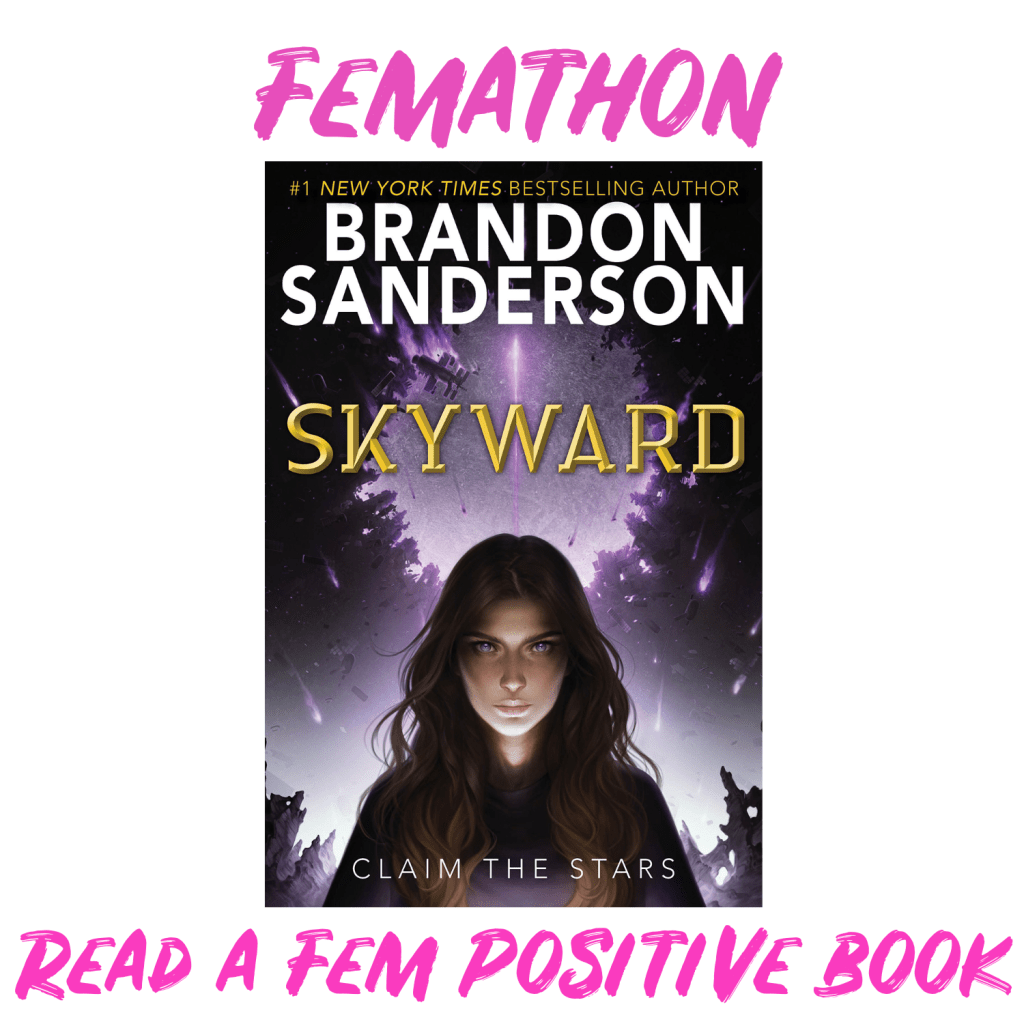
Does a YA SciFi with rich character building and a well-paced plot sound like a fun time? Also, does the wording “Doom Slug” entice you? Then you’ll want to check out Skyward by Brandon Sanderson. The main character, Spensa, is by far one of my favorite characters I’ve ever read. There are BIPOC characters – especially if you count fey diversity, though since none of these people are on Earth and this is set in the future I’m not sure how you’d want to count that. This could also count for Platonic Fem Relationship and Fems Fight Back.

Defeated, crushed, and driven almost to extinction, the remnants of the human race are trapped on a planet that is constantly attacked by mysterious alien starfighters. Spensa, a teenage girl living among them, longs to be a pilot. When she discovers the wreckage of an ancient ship, she realizes this dream might be possible—assuming she can repair the ship, navigate flight school, and (perhaps most importantly) persuade the strange machine to help her. Because this ship, uniquely, appears to have a soul.

– Goodreads Book Blurb

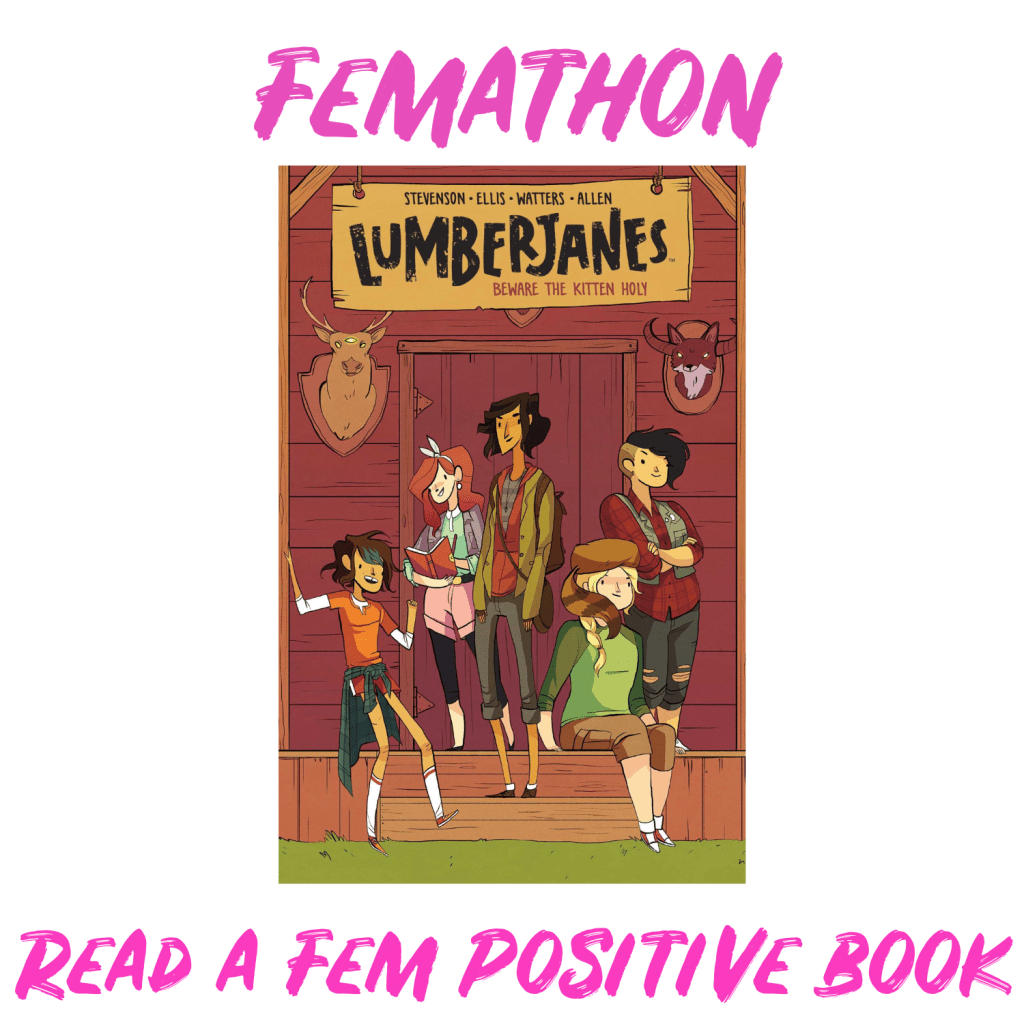
Think Girlscouts Hard-core-lady-types Camp with fantasy elements, friendships galore, BIPOC, and LGBTQIA+ representation – that’s what the Lumberjanes graphic novel series is all about. These books are aimed for people in their tween-stage of life, but they’re fun for the whole family, in my opinion. Aside from the previously mentioned categories, this could also in Fems Fight Back.

At Miss Qiunzilla Thiskwin Penniquiqul Thistle Crumpet’s camp for hard-core lady-types, things are not what they seem. Three-eyed foxes. Secret caves. Anagrams. Luckily, Jo, April, Mal, Molly, and Ripley are five rad, butt-kicking best pals determined to have an awesome summer together… And they’re not gonna let a magical quest or an array of supernatural critters get in their way! The mystery keeps getting bigger, and it all begins here. Collects Lumberjanes No. 1-4.

– Goodreads Book Blurb

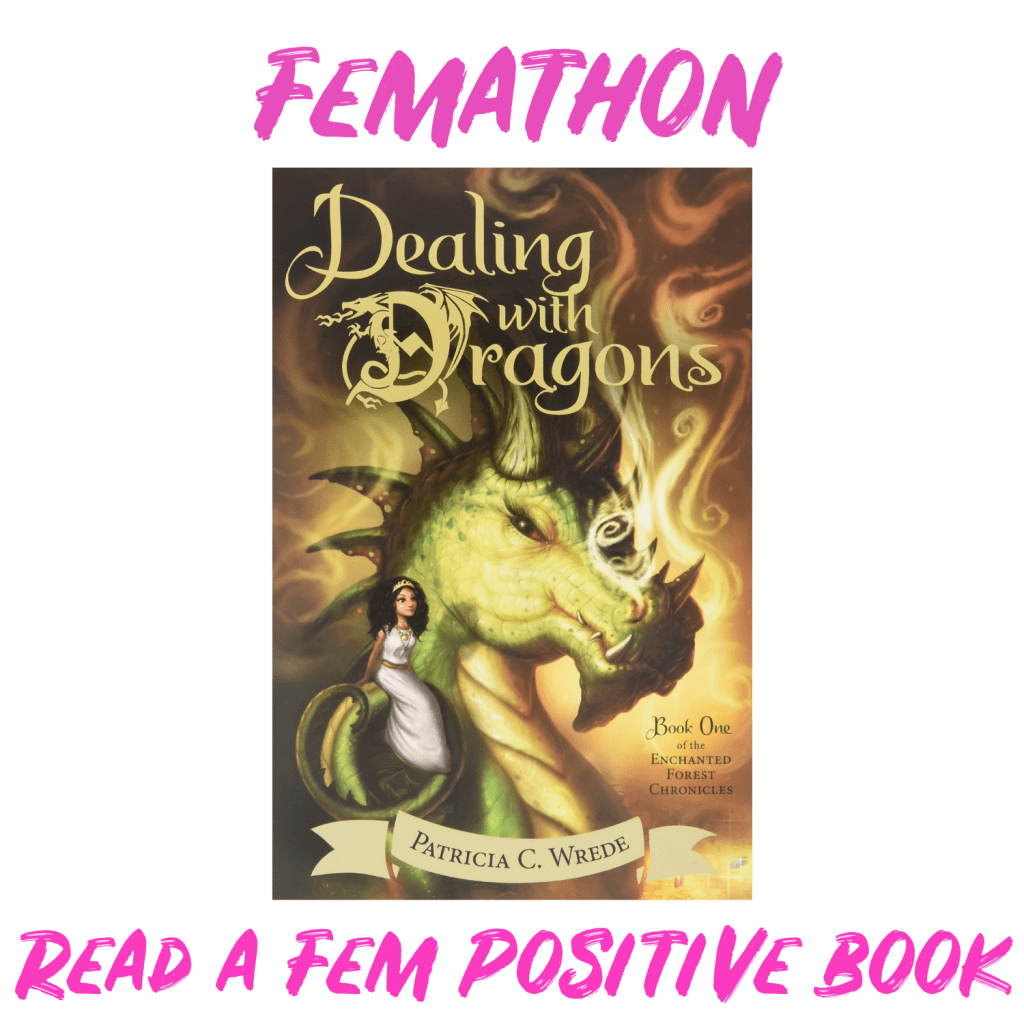
Dealing with Dragons by Patricia C. Wrede is another fabulous middle grade novel that is part of a four book series called The Enchanted Forest Chronicles. Technically this is second book written in this series though it is the first book of the chronological order (and the best book in the series to me). Our MC is a princess that breaks most of the princess rules in her world, and I love her for it. This could also count in Platonic Fem Relationship, and Fems Fight Back. While this book may exhibit some typical tropes of today, this was fairly groundbreaking for when it came out originally in 1990.

Cimorene is everything a princess is not supposed to be: headstrong, tomboyish, smart – and bored. So bored that she runs away to live with a dragon – and finds the family and excitement she’s been looking for.

– Goodreads Book Blurb

I just had to find a way to get some Greek Mythology into this mix. Circe by Madeline Miller is a fun retelling of some classic myths from Circe’s perspective. I’d classify this as Adult fantasy/mythology. You don’t need previous Greek Mythology knowledge to be able to follow the story, but it is a nice bonus if you do have that knowledge. This could also count in Platonic Fem Relationship and Fems Fight Back.

In the house of Helios, god of the sun and mightiest of the Titans, a daughter is born. But Circe is a strange child – not powerful, like her father, nor viciously alluring like her mother. Turning to the world of mortals for companionship, she discovers that she does possess power – the power of witchcraft, which can transform rivals into monsters and menace the gods themselves.

Threatened, Zeus banishes her to a deserted island, where she hones her occult craft, tames wild beasts and crosses paths with many of the most famous figures in all of mythology, including the Minotaur, Daedalus and his doomed son Icarus, the murderous Medea, and, of course, wily Odysseus.

But there is danger, too, for a woman who stands alone, and Circe unwittingly draws the wrath of both men and gods, ultimately finding herself pitted against one of the most terrifying and vengeful of the Olympians. To protect what she loves most, Circe must summon all her strength and choose, once and for all, whether she belongs with the gods she is born from, or the mortals she has come to love.

– Goodreads Book Blurb

Femathon Classics Recommendations

In case you missed my last post, I’ll be participating in Femathon in March. If you’ve been following me for a while you probably know that I don’t really read much in the classics department. In fact, I’ve only read three of the books in this list so far. Nevertheless, here are some books I’ve heard are classics that you may want to consider.

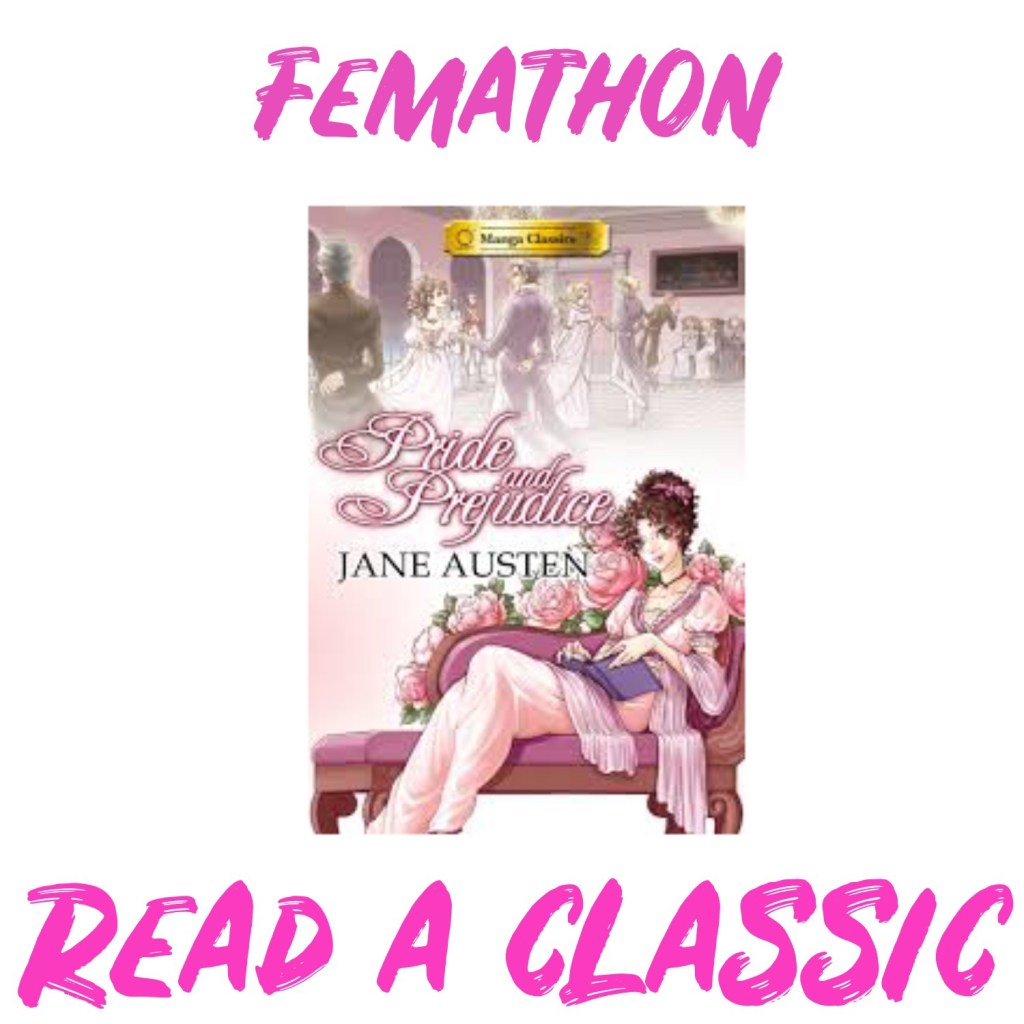
This is the Manga Classics adaptation for Pride and Prejudice by Jane Austen. I have read this version and thoroughly enjoyed it. There’s also a “and Zombies” adaptation as well if that sounds like it might be fun.

Since its immediate success in 1813, Pride and Prejudice has remained one of the most popular novels in the English language. Jane Austen called this brilliant work “her own darling child” and its vivacious heroine, Elizabeth Bennet, “as delightful a creature as ever appeared in print.” The romantic clash between the opinionated Elizabeth and her proud beau, Mr. Darcy, is a splendid performance of civilized sparring. And Jane Austen’s radiant wit sparkles as her characters dance a delicate quadrille of flirtation and intrigue, making this book the most superb comedy of manners of Regency England.

– Goodreads Book Blurb (for the original story)

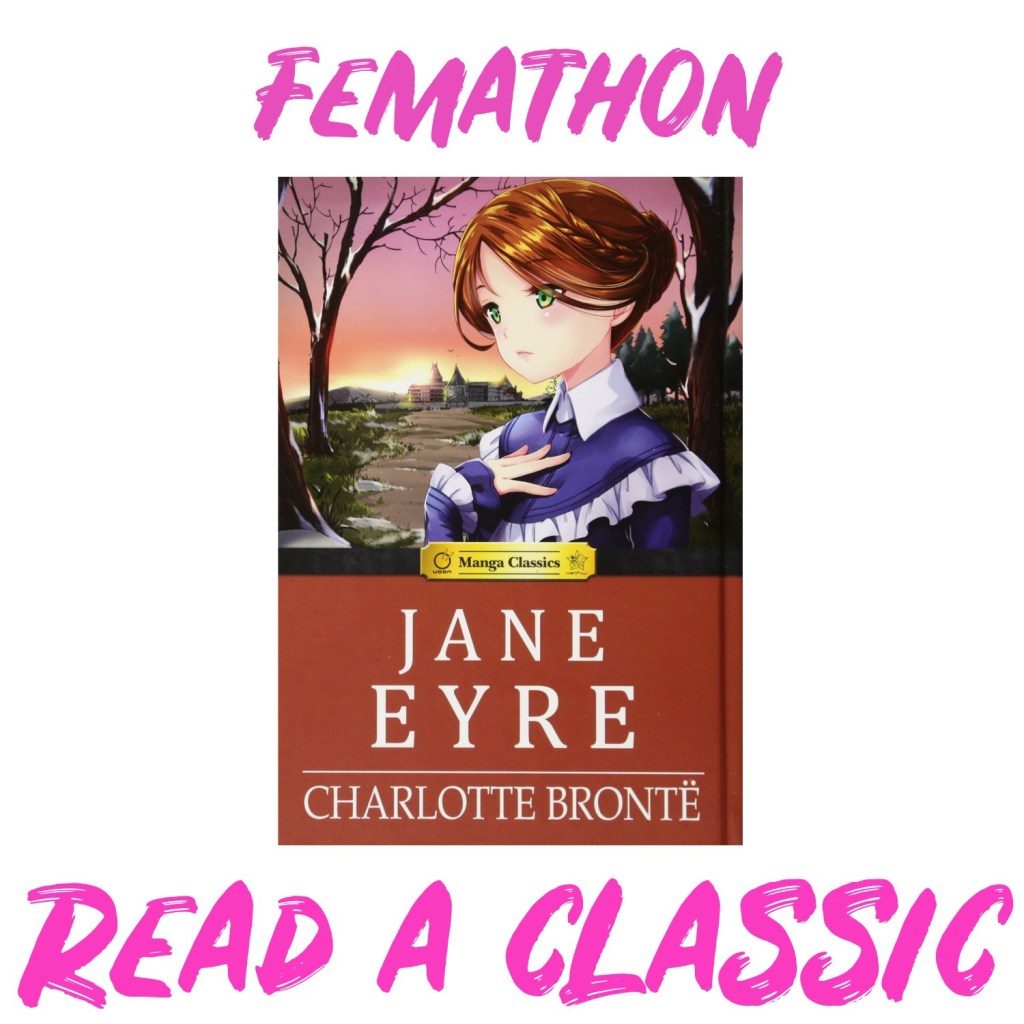
Jane Eyre … because Brontë? This is one of those classics I still haven’t gotten around to yet, but there’s a Manga Classics adaptation with my name on it from the library, so I’m finally going to try it.

As an orphaned child, Jane Eyre is first cruelly abused by her aunt, then cast out and sent to a charity school. Though she meets with further abuse, she receives an education, and eventually takes a job as a governess at the estate of Edward Rochester. Jane and Rochester begin to bond, but his dark moods trouble her. When Jane uncovers the terrible secret Rochester has been hiding, she flees and finds temporary refuge at the home of St. John Rivers.

– Goodreads Book Blurb

Austen, the queen of regency writing strikes again! I still haven’t read this one either, but the Manga Classics version definitely puts it on my radar now.

When Elinor Dashwood’s father dies, her family’s finances are crippled. After the Dashwoods move to a cottage in Devonshire, Elinor’s sister Marianne is torn between the handsome John Willoughby and the older Colonel Brandon. Meanwhile, Elinor’s romantic hopes with Edward Ferrars are hindered due to his prior engagement. Both Elinor and Marianne strive for love while the circumstances in their lives constantly change. Manga Classics brings new life to Jane Austen’s very first novel. Sense and Sensibility is a classic tale about love, romance and heartbreak in this brilliant manga adaption.

– Goodreads Book Blurb

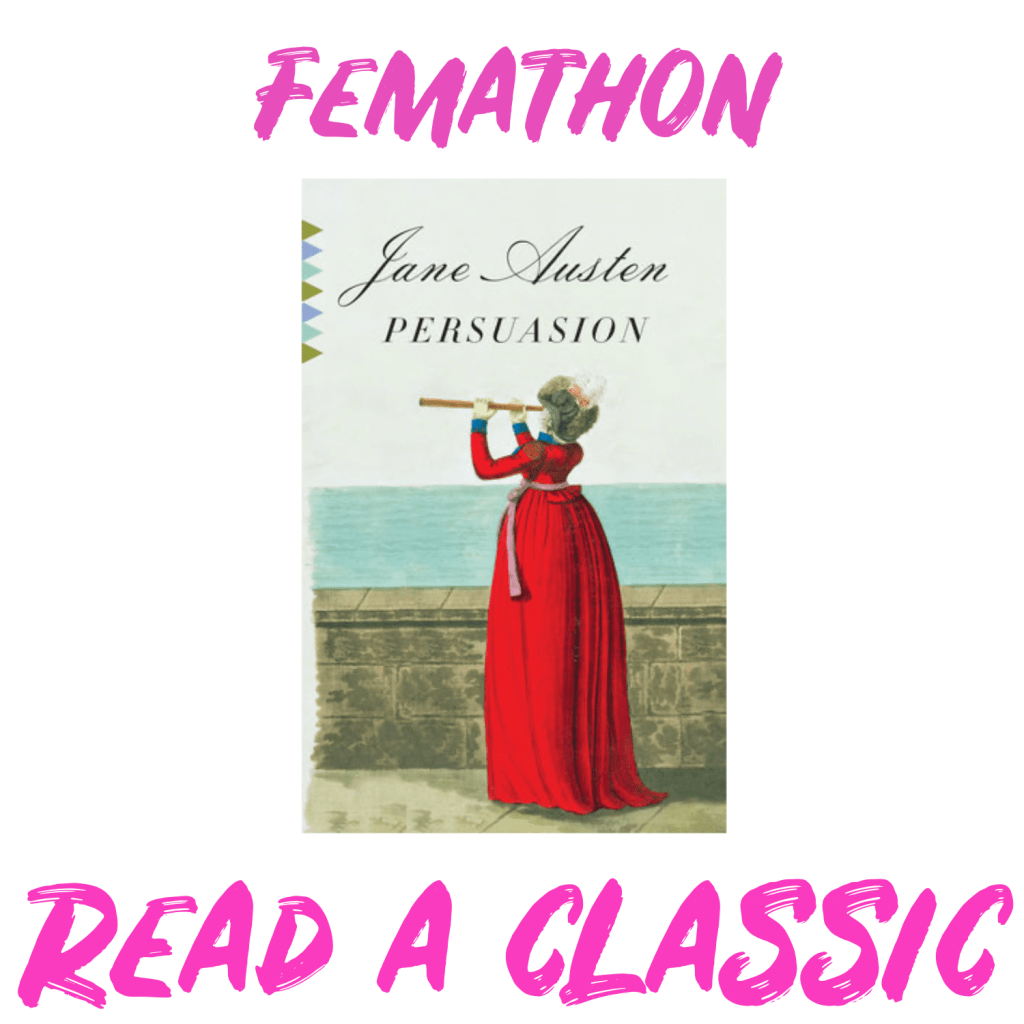
MOAR AUSTEN! Can you tell I have a friend that loves her work and had me put these on my TBR when I was 13? Wow these have been on my TBR for ages…

Twenty-seven-year old Anne Elliot is Austen’s most adult heroine. Eight years before the story proper begins, she is happily betrothed to a naval officer, Frederick Wentworth, but she precipitously breaks off the engagement when persuaded by her friend Lady Russell that such a match is unworthy. The breakup produces in Anne a deep and long-lasting regret. When later Wentworth returns from sea a rich and successful captain, he finds Anne’s family on the brink of financial ruin and his own sister a tenant in Kellynch Hall, the Elliot estate. All the tension of the novel revolves around one question: Will Anne and Wentworth be reunited in their love?

Jane Austen once compared her writing to painting on a little bit of ivory, 2 inches square. Readers of Persuasion will discover that neither her skill for delicate, ironic observations on social custom, love, and marriage nor her ability to apply a sharp focus lens to English manners and morals has deserted her in her final finished work.

– Goodreads Book Blurb

Ha! Finally another one on this list that I have read … once … in high school … and immediately mostly purged from my memory because it was filled with sooo much bigotry, among other things. I added it to this list for a historical reminder of how far women’s rights have come (and a reminder that sometimes stuff like this still happens today for some reason).

Set in 17th-century Puritan Boston, Massachusetts, during the years 1642 to 1649, it tells the story of Hester Prynne, who conceives a daughter through an affair and will not reveal her lover’s identity. The scarlet letter A (for adultery) she has to wear on her clothes, along with her public shaming, is her punishment for her sin and her secrecy. She struggles to create a new life of repentance and dignity. Throughout the book, Hawthorne explores themes of legalism, sin, and guilt.

– Goodreads Book Blurb

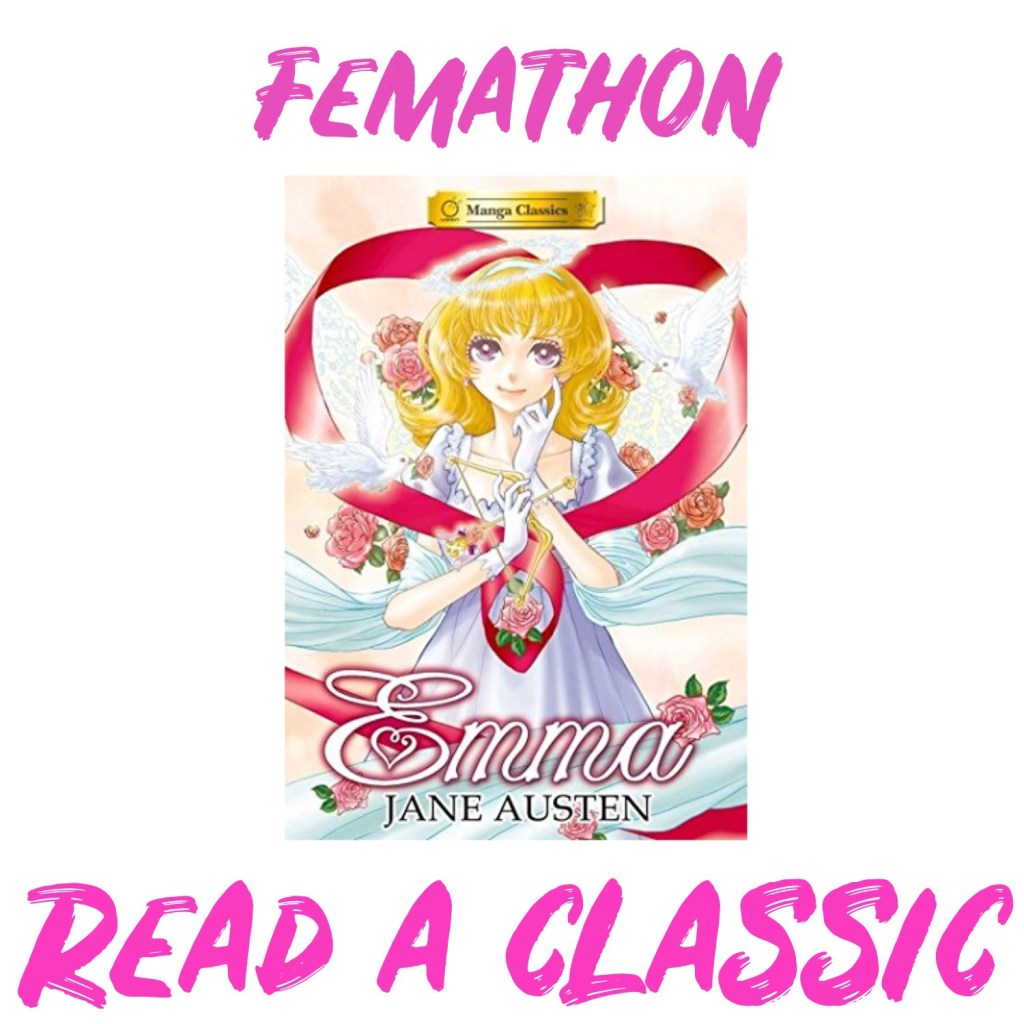
She’s baaaaaccckkkkk – and this is another one I still haven’t read … oops

Emma Woodhouse is one of Austen’s most captivating and vivid characters. Beautiful, spoilt, vain and irrepressibly witty, Emma organizes the lives of the inhabitants of her sleepy little village and plays matchmaker with devastating effect.

– Goodreads Book Blurb

Aha! The third one on this list that I have read because it was originally part of my high school reading requirements. This I can actually see myself going back to re-read the originals of and then rewatching the black and white films. Come to think of it, this was probably my first introduction to science fiction.

Obsessed with natural philosophy, young Victor Frankenstein succeeds in creating life from its basic elements – and abandons the newborn monstrosity in terror when he cannot bear to look at it. The rejected creature vanishes, and Victor attempts to forget what he has done…

But the monster survives. It learns. Deprived of everything, fated to forever be alone, it has nothing left but revenge.

– Goodreads Book Blurb

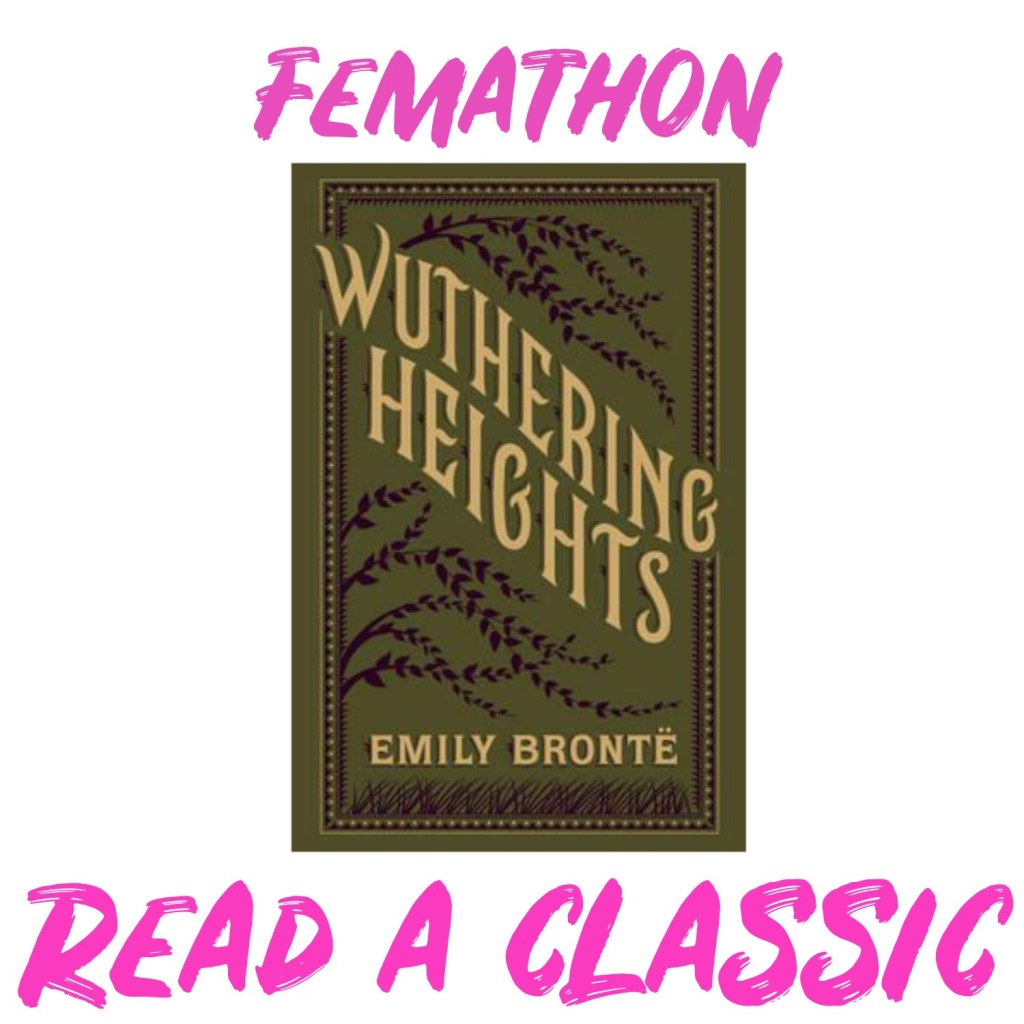
The only reason I know about this book is because “it’s that other Brontë sister book” … I don’t know if I’ll ever get to the original or not, but I need an adaptation version – please leave me any suggestions you may have in the comments?

Wuthering Heights is Emily Brontë’s only novel. Written between October 1845 and June 1846, Wuthering Heights was published in 1847 under the pseudonym “Ellis Bell”; Brontë died the following year, aged 30. Wuthering Heights and Anne Brontë’s Agnes Grey were accepted by publisher Thomas Newby before the success of their sister Charlotte’snovel, Jane Eyre. After Emily’s death, Charlotte edited the manuscript of Wuthering Heights, and arranged for the edited version to be published as a posthumous second edition in 1850. 

Although Wuthering Heights is now widely regarded as a classic of English literature, contemporary reviews for the novel were deeply polarised; it was considered controversial because its depiction of mental and physical cruelty was unusually stark, and it challenged strict Victorian ideals of the day regarding religious hypocrisy, morality, social classes and gender inequality.The English poet and painter Dante Gabriel Rossetti, although an admirer of the book, referred to it as “A fiend of a book – an incredible monster  […] The action is laid in hell, – only it seems places and people have English names there.” 

– Goodreads Book Blurb

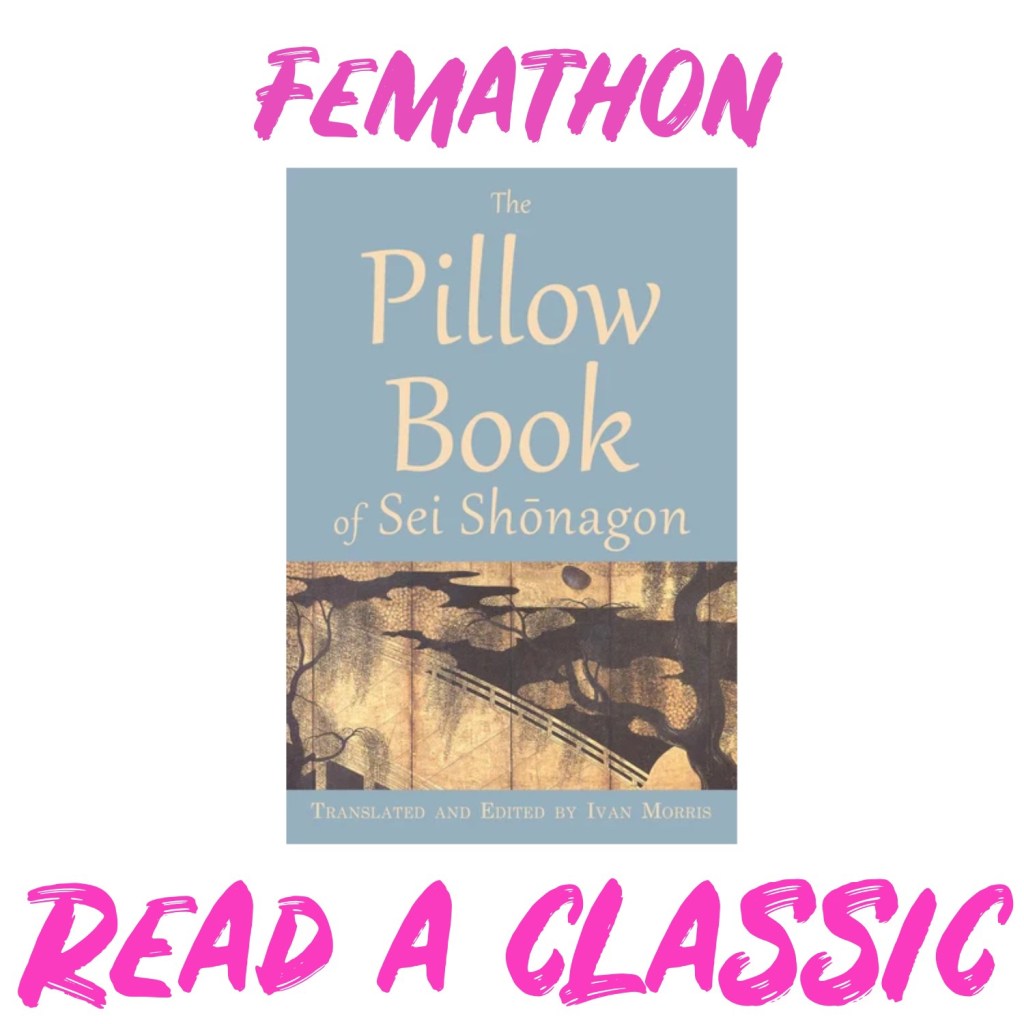
I don’t know about you, but the “classics” list I grew up on didn’t include anything that wasn’t English/American – aka white people stories. There are a lot of other books coming up in my BIPOC and Non Fiction recommendations which would also fit in on this list – I just wanted to space the content out a bit. Anyways, this book was written during the Heian period in Japan. If there are other multicultural classics that have been translated into English, please do let me know about them – they’re not exactly easy to find yet.

The Pillow Book of Sei Shonagon is a fascinating, detailed account of Japanese court life in the eleventh century. Written by a lady of the court at the height of Heian culture, this book enthralls with its lively gossip, witty observations, and subtle impressions. 

Lady Shonagon was an erstwhile rival of Lady Murasaki, whose novel, The Tale of Genji fictionalized the elite world Lady Shonagon so eloquently relates. Featuring reflections on royal and religious ceremonies, nature, conversation, poetry, and many other subjects, The Pillow Book is an intimate look at the experiences and outlook of the Heian upper class, further enriched by Ivan Morris’s extensive notes and critical contextualization. 

– Goodreads Book Blurb

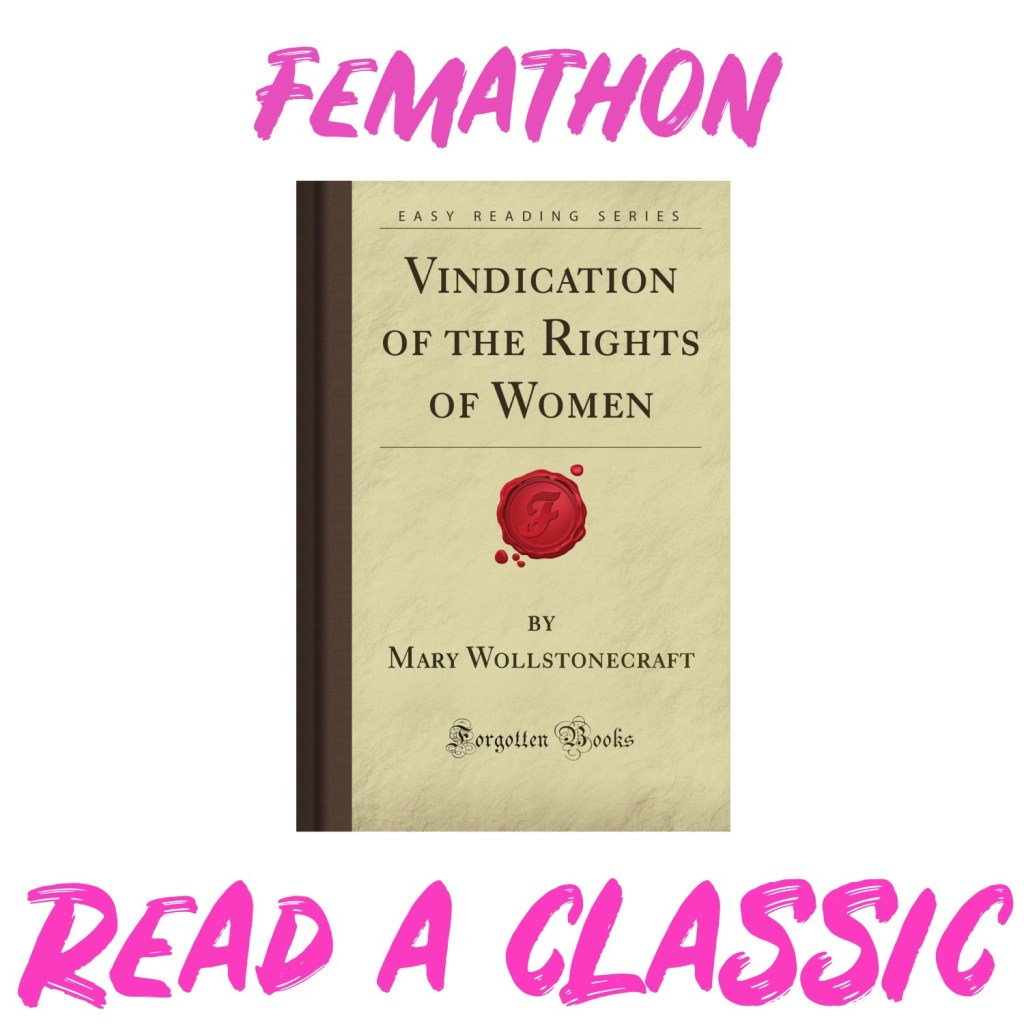
Weirdly, I’ve studied a lot of American and European history from the late 1700’s, and yet for some reason I’ve never managed to read this yet. All I know is that the song Sister Suffragette from Mary Poppins is stuck in my head for some reason after reading the synopsis for this one.

Writing in an age when the call for the rights of man had brought revolution to America and France, Mary Wollstonecraft produced her own declaration of female independence in 1792. Passionate and forthright, A Vindication of the Rights of Woman attacked the prevailing view of docile, decorative femininity, and instead laid out the principles of emancipation: an equal education for girls and boys, an end to prejudice, and for women to become defined by their profession, not their partner. Mary Wollstonecraft’s work was received with a mixture of admiration and outrage – Walpole called her ‘a hyena in petticoats’ – yet it established her as the mother of modern feminism.

– Goodreads Book Blurb

I don’t know how I haven’t heard of this book until I started making this list, but the synopsis sounds like something I may actually want to willingly read regardless of it being part of a classics list.

Set in a Roman Catholic Europe of violent passions and extreme oppression, the novel follows the fate of its heroine Adeline, who is mysteriously placed under the protection of a family fleeing Paris for debt. They take refuge in a ruined abbey in south-eastern France, where sinister relics of the past – a skeleton, a manuscript, and a rusty dagger – are discovered in concealed rooms. Adeline finds herself at the mercy of the abbey’s proprietor, a libidinous Marquis whose attentions finally force her to contemplate escape to distant regions. Rich in allusions to aesthetic theory and to travel literature, The Romance of the Forest is also concerned with current philosophical debate and examines systems of thought central to the intellectual life of late eighteenth-century Europe.

– Goodreads Book Blurb

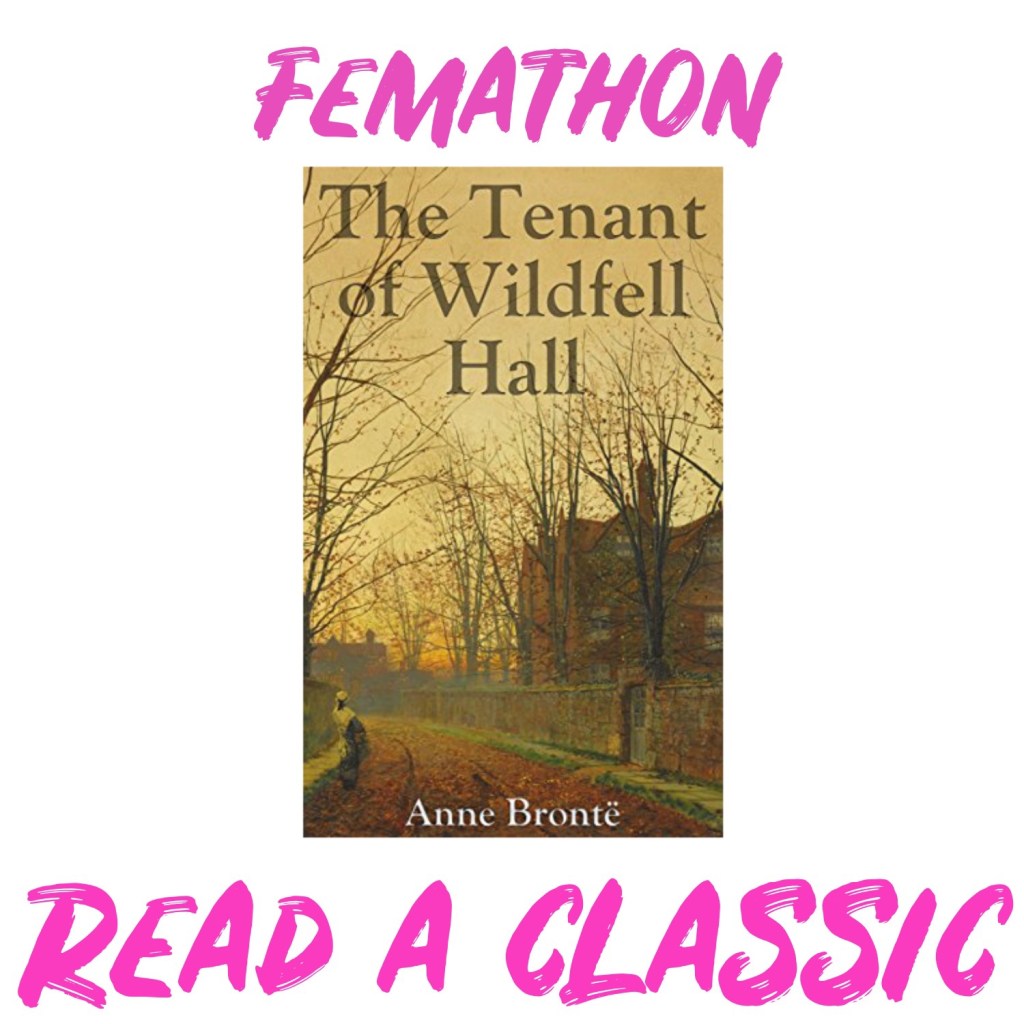
Aren’t all of the Brontë books basically required to show up on a feminist classics list? This is another one I still haven’t read…

“The Tenant of Wildfell Hall” is the second and final novel by the English author Anne Brontë. It was first published in 1848 under the pseudonym Acton Bell. Probably the most shocking of the Brontës’ novels, it had an instant and phenomenal success, but after Anne’s death her sister Charlotte prevented its re-publication. The novel is framed as a series of letters from Gilbert Markham to his friend and brother-in-law about the events leading to his meeting his wife. A mysterious young widow arrives at Wildfell Hall, an Elizabethan mansion which has been empty for many years, with her young son and servant. She lives there in strict seclusion under the assumed name Helen Graham and very soon finds herself the victim of local slander. Refusing to believe anything scandalous about her, Gilbert Markham, a young farmer, discovers her dark secrets. In her diary, Helen writes about her husband’s physical and moral decline through alcohol, and the world of debauchery and cruelty from which she has fled. This novel of marital betrayal is set within a moral framework tempered by Anne’s optimistic belief in universal salvation. The Tenant of Wildfell Hall is mainly considered to be one of the first sustained feminist novels. May Sinclair, in 1913, said that the slamming of Helen’s bedroom door against her husband reverberated throughout Victorian England. In escaping her husband, Helen violates not only social conventions, but also English law.

– Goodreads Book Blurb

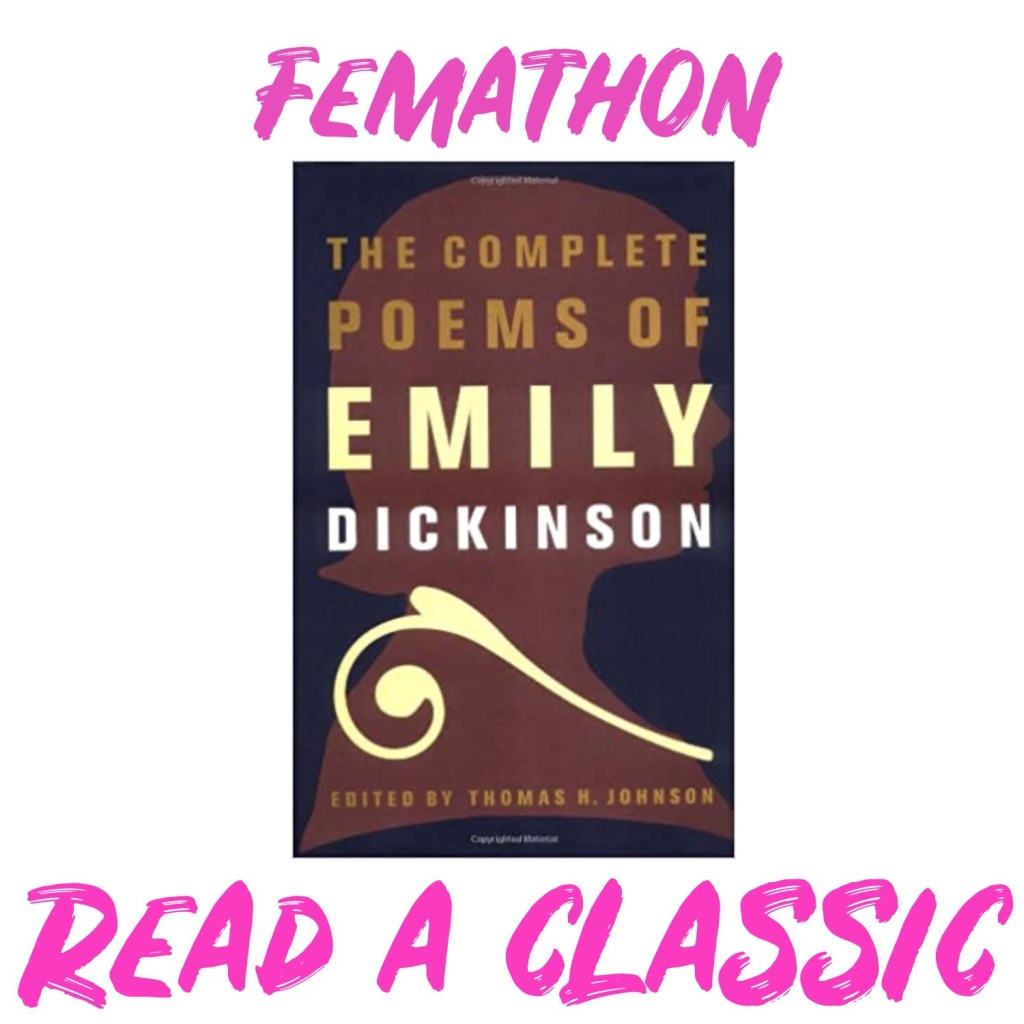
Have I read all of Dickinson’s poems? No. But I definitely remember liking the ones I have read from time to time, so why not add the collected works to this list?

Dickinson’s poetry is remarkable for its tightly controlled emotional and intellectual energy. The longest poem covers less than two pages. Yet in theme and tone her writing reaches for the sublime as it charts the landscape of the human soul. A true innovator, Dickinson experimented freely with conventional rhythm and meter, and often used dashes, off rhymes, and unusual metaphors—techniques that strongly influenced modern poetry. Dickinson’s idiosyncratic style, along with her deep resonance of thought and her observations about life and death, love and nature, and solitude and society, have firmly established her as one of America’s true poetic geniuses.

– Goodreads Book Blurb

Hopefully those are some solid classics recommendations to get you started! Have you read any of the books on this list? What are your thoughts?

March TBR | 2021 Edition

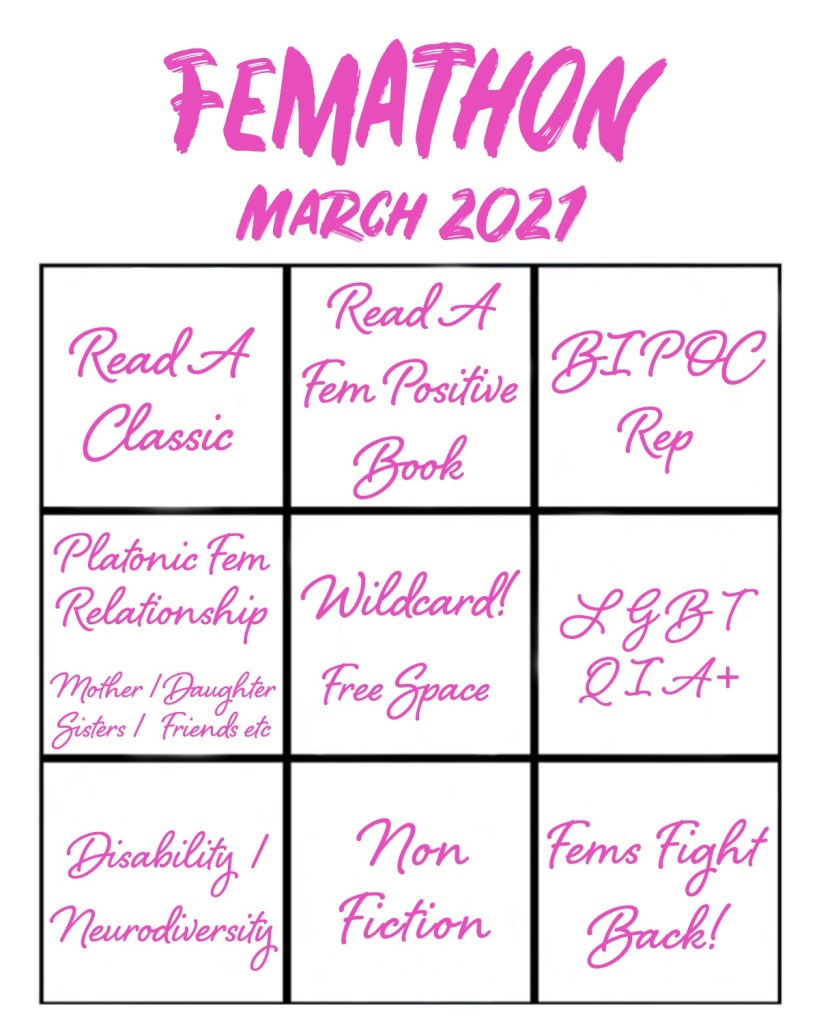
Image is of the Femathon bingo board. It is a 3 by 3 board  from top to bottom and left to right it reads: Read a classic, Read a fem positive book, BIPOC rep, platonic fem relationship ie mother/daughter sisters/friends/etc, wildcard free space, LGBTQIA+, disability/neurodiversity, non fiction, fems fight back

So there are at least 2 readathons I’ll be participating in next month: Femathon and Wargames Readathon. I’ll actually be co-hosting Femathon with a bunch of other lovely people, so if you want to join in with us you should totally check out this blog post: https://booksandchocaholic.wordpress.com/2021/01/31/femathon-2021-announcement/

Photo is of book cover for Elantris by Brandon Sanderson. There is a shining cityscape in the background, a dramatically shaded outline of a man standing several steps behind a womanalso standing on some steps looking wistfully off into the distance

As for Wargames, I found out about it through this video: https://youtu.be/eSo88p9RgJc

I’m going to follow The Sage from The Light Path for Wargames and I’m pretty sure Elantris by Brandon Sanderson fits all of the prompts.

Elantris was the capital of Arelon: gigantic, beautiful, literally radiant, filled with benevolent beings who used their powerful magical abilities for the benefit of all. Yet each of these demigods was once an ordinary person until touched by the mysterious transforming power of the Shaod. Ten years ago, without warning, the magic failed. Elantrians became wizened, leper-like, powerless creatures, and Elantris itself dark, filthy, and crumbling…

– Goodreads Book Blurb
Image is of cover for Vasilisa  by Julie Mathison. It is mostly blue with a moonlit forest in the background. Centered on the cover is an old looking shack/house held up bu yellow chicken legs. In the foreground stands a girl wearing a white dress and red lipstick looking at the reader with a slight air of determination on her face.

While I have already made SEVERAL recommendations over on Instagram (@thebookishsock) for Femathon, I still haven’t actually picked what I’m going to read 😅 … Faye did just make a gushing review for Vasilisa by Julie Mathison and said it counts for platonic fem friendship, fems fight back, and fem positive – so I guess that takes care of all of those prompts for me.

Three witches, two children, one ogre — and nowhere to run. It’s 1919, but in Edenfall, Pennsylvania, the Great War is not over — not for Vasilisa, at least. Papa is presumed dead on the fields of Flanders, Mama is being courted by an absolute ogre, and now Babka, her beloved grandma, has had a bad spell. Or has she fallen under one? Only the Old Tales, the Russian fables Vasilisa was raised on, offer any comfort or counsel. But what if they are more than child’s tales? …

– Goodreads Book Blurb
photo of front cover the Manga Classics adaptation of Jane Eyre

If my library copy of the Manga Classics version of Jane Eyre comes in on time, I’ll read it as my classic choice.

As an orphaned child, Jane Eyre is first cruelly abused by her aunt, then cast out and sent to a charity school. Though she meets with further abuse, she receives an education, and eventually takes a job as a governess at the estate of Edward Rochester. Jane and Rochester begin to bond, but his dark moods trouble her. When Jane uncovers the terrible secret Rochester has been hiding, she flees and finds temporary refuge at the home of St. John Rivers.

– Goodreads Book Blurb
Photo of N.K. Jemisin

For BIPOC rep I’ll probably be reading something by N.K. Jemisin since I just added a lot of her books to my collection thanks to some sale prices. I have no idea what out of that pile I’m going to pick her though.

Photo is of wild card bingo tile - the background is white and the lettering is magenta.

The wild card I’m keeping as my wild card for now. At the end of the month I’ll have to let you know that that ends up being.

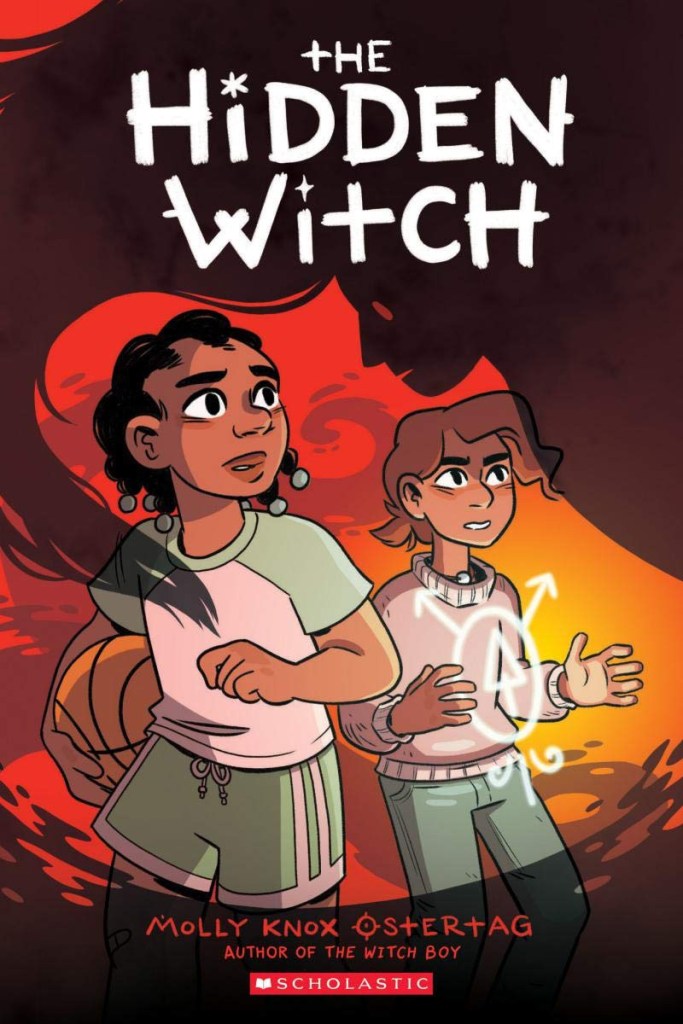
Image for The Hidden Witch book cover

For LGBTQIA+ I’ll hopefully be reading The Hidden Witch by Milly Ostertag as long as my library hold comes in on time.

Aster and his family are adjusting to his unconventional talent for witchery; unlike the other boys in his family, he isn’t a shapeshifter. He’s taking classes with his grandmother and helping to keep an eye on his great-uncle whose corrupted magic wreaked havoc on the family. Meanwhile, Aster’s friend from the non-magical part of town, Charlie, is having problems of her own — a curse has tried to attach itself to her. She runs to Aster and escapes it, but now the friends must find the source of the curse before more people — normal and magical alike — get hurt.

– Goodreads Book Blurb

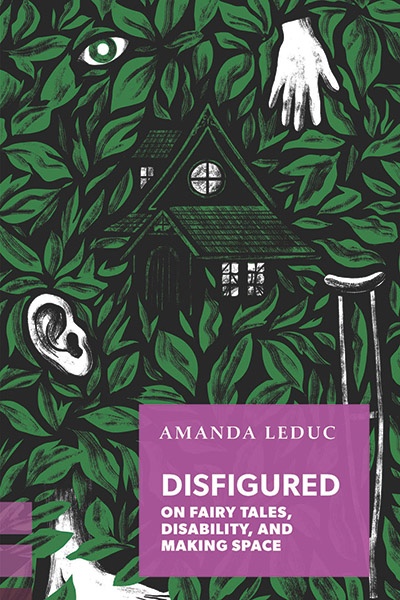
I’ve been meaning to read my copy of Amanda Leduc’s Disfigured: On Fairy Tales, Disability, and Making Space for a while now, so that’s my disability/neurodiversity pick.

In fairy tales, happy endings are the norm—as long as you’re beautiful and walk on two legs. After all, the ogre never gets the princess. And since fairy tales are the foundational myths of our culture, how can a girl with a disability ever think she’ll have a happy ending? By examining the ways that fairy tales have shaped our expectations of disability, Disfigured will point the way toward a new world where disability is no longer a punishment or impediment but operates, instead, as a way of centering a protagonist and helping them to cement their own place in a story, and from there, the world…

– Goodreads Book Blurb
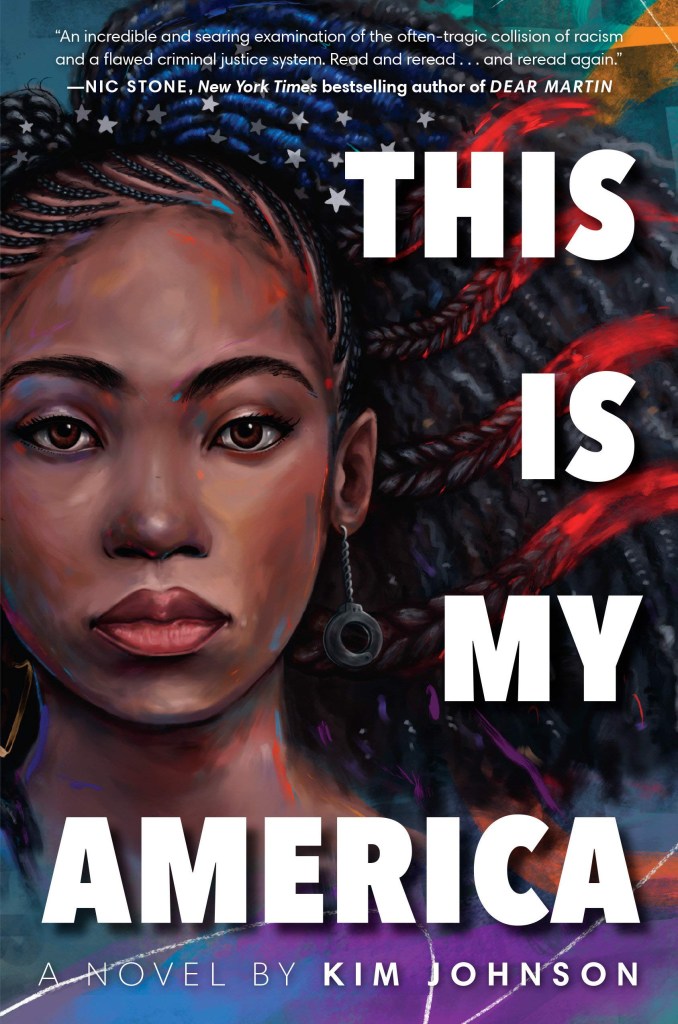
photo is of cover of This Is My America by Kim Johnson

I should also have a copy of This is My America by Kim Johnson on hold from the library that should come in soon, so I think I’m going to try to cram it in as my non fiction choice even though it’s realistic fiction – that is unless I’m able to check out a different book that is actually non fiction in time.

Every week, seventeen-year-old Tracy Beaumont writes letters to Innocence X, asking the organization to help her father, an innocent Black man on death row. After seven years, Tracy is running out of time—her dad has only 267 days left. Then the unthinkable happens. The police arrive in the night, and Tracy’s older brother, Jamal, goes from being a bright, promising track star to a “thug” on the run, accused of killing a white girl. Determined to save her brother, Tracy investigates what really happened between Jamal and Angela down at the Pike. But will Tracy and her family survive the uncovering of the skeletons of their Texas town’s racist history that still haunt the present?

– Goodreads Book Blurb

I think that’s everything I’m going to “schedule” to read … but then again I’m a mood reader, so there’s no telling what might actually end up happening. What do you plan to read in March? Let me know in the comments 💜

Update 6: The Worst Book I’ve Read in 2020

If you’ve missed the original post, check this out first: https://victoriarmendes.wordpress.com/2020/08/30/the-worst-book-ive-read-in-2020/

Also if you need to get caught up on my other previous installments, just scroll through my blog. I’m too lazy to link them all at this point. In fact, I haven’t written anything recently because I dread writing these posts. I thought it might be cathartic to go on a rant when I first started this series, but writing these AFTER I finished reading the book feels more like re-reading a terrible experience than going on a stress-relieving rant. I’m now asking myself how I should finish this series and avoid dragging my feet on it anymore. Could I go through and give a synopsis as I give my criticism as I have so far? Yes… but that’s what gets me stuck in this re-reading loop. So instead, I think I’ll skip the whole synopsis bits and just publish the rest of my notes with minor tweaks added. I’d really rather get back to writing my reviews as I’m reading a book – or just talking about the ones I truly enjoy.

I suppose we need to pick up on Chapter Aye:

I want you to understand something about fear. Fear is a valid emotion that occupies a portion of our hearts and minds from time to time. However, if you let fear take over, it will set limits. Now, look at where we are! We live in space, a vast place without limits. Fear can have no rule here, else it will suffocate and destroy us.

I mean it kinda works for this passage? I would have preferred a deeper delve into fear and actually have listed some of the benefits of this emotion. I feel like this is more of teaching people to ignore fear instead of actually processing it – which is counterintuitive from how that quote actually starts. Like, why say that it’s a valid emotion and then proceed to go full “black-and-white” thought pattern on it and yeet fear out of the picture?

Chapter J:

“Was that supposed to be a joke?” I asked. “Am I supposed to suppose that you are supposing I supposed it to be so?” “Fuck, you’re worse than Qarl.”

This is supposed to be a funny bit, but it’s not really that funny when it has to be explained … also this may have more to do with the fact that I grew up on this particular flavor of humor, but I’m sooooo tired of this style. My gripe here can also be applied to the next quote:

“You can’t? Your legs look fine to me.” He bent his long pink neck down and pecked rudely at my legs with his sharp bill. “Ow! Stop it!” I yelled. Qarl snorted with laughter. “Your friend is amused by our conduct,” the ostrich noted. “Shall I continue?” He leaned down toward my legs again…

There is one quote from this chapter that has some merit to it:

If they could, I’d want them to understand that prejudice and ignorance do not stay isolated. They are dangerous things that spread perniciously and have real-life effects on their targets…

But then the chapter goes right back to being problematic. Who just sees people starting to fall in love and is immediately urged to embarrass them? Why is this impulse seen as “quite natural”? – more like quite rude

He maintained a serious expression on his face, but his eyes turned green with mischievous delight. I guessed that he would never admit it, but I knew he was being filled with an urge to embarrass the pair, an impulse that is quite natural to feel when one witnesses blossoming love in others.

And then the author starts to address how the book breaks the fourth wall – which if done right is great, but this book doesn’t really pull it off … especially when it’s being brought up SO much later in the story from when it originally started taking place and didn’t need an explanation in the first place. It would be one thing if this was a skill that was relevant and had a crucial role in the story, but it just doesn’t.

I then asked Qarl how he and other aliens could tell when someone was not spelling, hyphenating, or capitalizing a word correctly when they said it. He shrugged and told me that he couldn’t explain why most aliens had this gift of ultrasensitive hearing, just as I couldn’t explain why humans had the garrulous gift of gab.

And to further break up the story, another editor’s note shows up – which at this point the bit is SO OLDDDDDDD.

Editor’s note: Once again, we must beg your leave to continue the next portion of the narrative in poetry, as the author felt this was the best way to proceed.

Chapter K:

“Drink!” she ordered. “What is it?” I asked. “It is the Elixir of the Damned,” she replied coldly with an unnecessary flourish of her hand. The crowd ooooohed softly behind her. “Oh…ok then.” I lifted the flask to my lips and took a tentative sip. The Elixir of the Damned was clearly ginger ale. “This is clearly ginger ale,” I pointed out. She raised her hand as if to strike me. “Shut up!” she ordered. “You must drink it.”

How does the MC have a problem with drugs (meaning he’s not into them not that he has an addiction), recognize that his friend drank something that clearly affects his cognitive function, and then is FINE with drinking a random liquid?

And then we get this quote which is supposed to be sarcastic but just comes off as exasperated:

“That is utterly stupid,” I blurted out with a sarcastic chuckle. “Your whole lives revolve around this mystery woman that no one seems to know anything about. What’s the point of all this?”

But then the author show that he does know how to write some sarcasm:

The eyes seemed to glow redder as I approached, but I’m sure my gripping fear had nothing to do with it.

Chapter L:

“What sorts of sins get you sent here?” “I honestly can’t even remember. I’ve been exposed to so many belief systems in my life that it is hard to keep them all straight. Everything is a sin to somebody’s god.”

If this wasn’t also based on actual religions I probably wouldn’t have an issue with it, but broad sweeping gestures like this are just not my cup of tea because it just isn’t accurate.

“Well, ignorance and intelligence are not mutually exclusive. Someone can be astute at knowing many things, but the danger often lies in what he chooses not to know.” “But surely someone can never know everything.” “This is correct. However, one must always be aware of how much he does not know and be both open to and willing to learn new points of view. “In addition,” the old man continued, “one must never become haughty and overconfident in his knowledge, for there is always more to learn, and even the wisest can be wrong. I would rather admit that I do not know something than think I know the answer when I actually do not. Come, I want to show you something.”

This is fairly decent I guess, but I don’t think the juxtaposition of ignorance and intelligence is quite the proper comeback for the previous line – to go with the analogy of this being a car and this issue being a squeaky wheel I’d rather spend more time talking about the blaring issues that are more akin to a cracked drive shaft or broken oil pump.

“So you’re a poet?” I asked. “I dabble here and there. Thoughts and ideas are not limited to the prose form. Sometimes, the best way to express something is with a poem.” “I like poetry too. Haven’t written anything in a while though.” “Well, when this adventure is over, maybe you’ll find the time to try again.” “Maybe. So far, I feel like this trip I’ve been on has just filled my head with a lot of useless information.”

Again with the 4th wall breaks I’m not looking for *facepalm* … and then an attempt of social commentary continues but again misses the mark:

“I’m so sorry. You are a guest in my home. You shouldn’t see my sorrow.” “Don’t be sorry,” I stopped him. “One should never have to apologize for sadness.” The irony of my words did not escape me, given the source of my recent conflict with the Maryvillians, but they seemed like the right words to say in the moment. Besides, I think I really started to believe those words even as I said them. I knew that this man’s sadness was vastly different from the one that ruled the nearby village, born out of a deep and undying love for a woman he knew well for many years. But I also knew that sorrow was a complex emotion, and I was starting to wonder if perhaps it was not up to me to judge the nature or merit of another’s grief.

blah blah blah more stuff happens and then we get lines that line up with the MC being incredibly self-centered, but it’s not fleshed out enough. Scars and pain are much more complex than wounds that have healed. One of the popular examples of grief is of grief being a button in a box and a ball in that box hitting the button. In the beginning the ball in the box is huge and constantly hits the button, but over time the ball shrinks and doesn’t hit the button as often. The button never goes away, but unless something rattles the box it probably isn’t going to be pressed – unlike in the beginning where virtually anything rattling the box will. Why this isn’t included in this passage? IDK

“I just want to make sure I make the right choices. I don’t want to do anything that’s going to hurt or scar me.” “Pain is, unfortunately, an unavoidable companion to life. We can hide from it, but it will always find us.” “So what can you do?” “Don’t be so afraid of scars. Scars are wounds that have healed.” I pondered his words before replying. “I hadn’t thought of them that way before, but I suppose you’re right.”

And then there’s a passage about money which is a HUGE oversimplification which I would say is written by someone who has never experienced financial hardship… again, if this was not set in the real world as a base then I wouldn’t gripe about it as much … BUT THIS SETTING STARTS OFF ON THE REAL EARTH NOT SOME ALTERNATE UNIVERSE OR THE AUTHOR’S CREATED WORLD

“Why do we save money? To spend it later. Why do we pass it down to our children? So they can spend it. Why do we give money to charity? So others can spend it. The chief end of money is to be spent.” The old man looked at me in amazement. “Words so wise from someone so young,” he mused quietly to himself. “I will take those words to heart.”

Then there’s more social commentary that misses the mark due to oversimplification:

“They are always obsessively grieving over various ‘sins’ that they find in others.” “The act of finding faults in others is a fault in itself,” the old man pointed out. I nodded in agreement. “I think they are realizing that the universe is changing, and they are becoming more desperate to preserve their way of life. They’re always casting blame on others.” “A desperate person will always find something to blame,” the old man noted. “Ain’t that the truth,” I agreed, glancing down at a beam of light stretching itself out on the floor in front of me. To my surprise, the sun had risen over the forest, its rays streaming in through the single window in the Vream’s hut. “Well, I suppose that’s my cue to go,” I said. “Much as I’d like to stay, my friend Qarl needs my help.”

And along those same lines are some very terrible thought patters (aka all fanatics are dumb) – I – just – just why:

I thought of Madame Stringent as he said this and nodded. “So I’ve discovered,” I replied. “The sad thing is that some fanatics are actually quite smart.”

And then we get the old fishing adage, but for some reason it’s tweaked for no apparent reason? I have another adage for this which actually does apply: If it ain’t broke don’t fix it.

“Talk to a man,” he said slowly, measuring each word, “and you give him a friend for a day. Teach a man to talk to himself and you give him a friend for a lifetime.”

And then we get this line, which at this point is a “no shit, Sherlock” moment:

It has been my pleasure, but do tread carefully. Advice can be misleading, you know.

Chapter M:

Oh great, we’re back to shitty “sarcasm” that isn’t actually sarcasm and also a joke that doesn’t work because it has to be explained *facepalm*

“Well, we’re kinda new,” the second lawyer admitted, a sheepish look on his face. “Clearly,” I quipped sarcastically

And even more bad oversimplifications that get turned into maybe a joke, but I can’t tell anymore:

But perhaps executioners couldn’t afford to have souls.

“Nice ride!” I exclaimed. “Thank you,” Travvis replied with a grin. “It’s the latest WheelMobile model, the Hx9. Comes with all the latest features.” “It’s amazing.” “I shouldn’t brag though. You know what they say: the nicer the vehicle, the bigger the asshole that drives it.” He chuckled merrily.

Why? Just y? I’m so tired of this shit.

Chapter N: – the one where he tried to write some LGBTQIA+ representation, but it’s not the kind of representation I really want because again with the oversimplifications of complex issues … but also this is somewhat “original” content because this is part of the fantasy setting for these books so I guess it kinda works even though I REALLY don’t like it?

“Why did you leave?” “I was actually kicked out by the village council.” “Oh shit, how come?” “They expelled me for being a gaylien.” “What’s a gaylien?” “We are a rare species of alien. We possess the Jenkins O’Yenkins gene.” “What does the gene do?” “Several things. For one, it causes us to be much happier than most. You will seldom see a sad gaylien. We also reproduce asexually—TMI, I know—and can see more colors in the light spectrum than any other species.” “That’s cool. What colors can you see that we can’t?” “All kinds. Rorange and broink and blurple and bleige and grellow and grold and whilver and vindigo and chartravender and so, so many others.” I was intrigued by the thought of colors that my eyes had never seen. “That’s really fascinating! What is it like to see so many colors?” “Well, to me it’s normal, but I love that the universe is so beautiful and colorful. I recognize that what I possess is a gift, and I’m grateful for it.” “So the council didn’t like that you were a gaylien?” “Not at all.” “Why not?”

I was too different. The worst sin was that I was too happy for them. I couldn’t mourn the absence of Mary like everyone else did. Trust me, I tried, but the sorrow just wasn’t there. It took me a long time before I found out about the gene I had. Once I knew about it, everything made so much more sense.” He continued, “But the council doesn’t believe in the JOY gene. They think I chose to be this way. And so they eventually got rid of me.” I shook my head. “That’s terrible.” “Not as terrible as choosing to live a lie would’ve been. To stifle my natural joy would’ve been torture. Trust me, I know from experience.”

Mother, please stop,” Travvis said gently. A silence fell over the chamber. I couldn’t believe my ears. “Don’t call me that!” the judge scolded. “You are no longer my son. You have chosen a life that is contrary to our ways.” “Mother, it’s me. Please listen.”

It’s not a fucking choice and there is no commentary directly around this to say it’s not a choice. Yes it’s introduced that he was born that way earlier, but they’re not reinforcing the point here where it really matters… and then there’s a shitty take on Shakespeare (maybe? tbh I’m not a huge Shakespeare fan unless the production is put on in it’s original form because the modern translations often miss the point of his works but this is a whole other tangent I could go on and this run-on sentence is long enough already) that doesn’t enhance the experience?

Farewell to thee, thou dearest of all plants, Which wert, short time ago, a fairest dream, But now, whether by Fate or merely chance, Art robbed of Life’s minutest spark or gleam. It seemeth strange that thou wert once so tall, So full of life, so strong, and, oh, so green, When now a frail and wilted thing is all That in this tragic moment can be seen. Where art thou now, fair jewel of the wood? Art thou forever gone from Time and Space? Dost thou lie here where once in life thou stood, Or in some sweet, ethereal resting place? Recall I well thy last few hours of life— A mirror of thy existence overall; How hard thou fought, through pain and toil and strife! Alas! At last thou finally hadst to fall. Thy withered leaves and drooping stem now speak A strong and silent message from the grave: In life, fight on, although the way be bleak; In death, be strong, have courage, and be brave! Farewell, thou beauteous flower of the wild! It is with sorrow that I turn away. But by thy death, the grown one and the child Shalt find the strength to[…]

And now we’re back to social commentary that misses the mark again:

Turning to me again, the bullfrog continued. “I couldn’t help overhearing earlier that you spent some time in Maryville.” “I did.” “Tell me, how did you find their way of life?” “Confusing…strict…sad.” “It is all that and more,” the bullfrog declared. “Religion is one of the deadliest poisons ever self-administered by livingkind. It is an enemy of free thought.” I was a bit taken aback by his candor but wasn’t sure I disagreed. The bullfrog wasn’t finished. “Absolute authority is another foe of the mind. Why do we need the rulers of Hob? Why do we need a queen? We are capable of governing ourselves.” One of the Queen’s soldiers marched over to silence the frog leader, but the Queen stopped him. “Let him speak,” she instructed calmly. The soldier backed away. The bullfrog blinked at him before continuing. “If we do not like our rulers, perhaps the problem is not the choice of ruler, but rather that we are not meant to be ruled. Why trade one master for another?” The Queen listened intently to his words but chose—perhaps wisely—not to engage. When they weren’t zapping flies or bellowing aphorisms, the Freckled Fraternity[…]

And there’s another issue where the phrasing and the intent are at a huge juxtaposition here where the frogs sound like they’ve been sniffing their own farts for too long when they’re criticizing those who proudly sniff farts. A tonal change would probably fix this issue:

“We are not like the birds,” he continued, “who preen themselves haughtily to impress others. We are not like the fish, who travel in schools, incapable of independent decision. Nay, we are free in body and mind. Our aim is neither to be special nor to conform to others, but to be truthful.”

And now for Chapter O – as in oh my gods why am I still writing this; all I’m doing is mostly copy and pasting at this point, and I still really want to yeet my computer so I can have a better excuse to be done with this already.

Another “just why was this even necessary” moment:

Then there was the man from the mathematics department who insisted that, in Earth-humans, brain was inversely proportional to beauty. “There’s even a formula for it,” he informed us excitedly. “It’s y = 1/x.” Incidentally, this was also the formula for representing someone falling in and out of love, he pointed out. After showing us a graph of his equation, the mathematician proudly showcased his array of acute triangles and their not-so-cute counterparts.

Chapter P:

The realization spread over me in a sickening wave. It was all making sense now: the dysleqsia, the blue skin, the horn pencil, the obsession with the letter Q. He was one of them! Qarl had had a major hand in planning this whole adventure. Of course this had been his plan all along.

This revelation this late does not make the MC feel “wise” as aforementioned in his talk on money with the WiserMiser …

Chapter Q:

“Hold it!” he shouted. “Don’t hurt me. I come in peace.” “And you’re gonna leave in pieces!” I shot back. I grabbed Qarl by the neck and lowered my head until my eyes were level with his. “I can’t believe I trusted you, Qarl. You betrayed me. You betrayed all of us!” Qarl laughed aloud. “No, I didn’t,” he protested. “Look, I can explain everything. Just let go of me.”

And why is MC making himself judge, jury, and executioner when there’s a whole chapter devoted to lawyers and how a misunderstanding can cause needless death???

“Well, Qarl, you’re kind of handing me these reasons on silver platters, you know,” I replied, my voice dripping with sarcasm. “It’s not like I’m digging deep for them.”

Again with the horrific use of “sarcasm” *rolls eyes and facepalms* … And, OH BOY AM I SO EXCITED, there’s even more social commentary that misses the mark:

I shook my head in stunned disbelief. “I can’t believe you helped construct one of the most feared things in the entire universe. Do you have trouble sleeping at night?” “I sleep just fine, thank you very much,” Qarl retorted instinctively, before lowering his voice. “Like I told you before, my past with Hob is something I’m not exactly proud of, but it happened, and I can’t change that.”

“I bet if you asked most of these aliens if they wanted to go back, they’d say no. This place is a paradise. Their worst fear has become their safe home. Why should they go back to the other side now?” “I suppose you’re right,” I reluctantly conceded. “But what about the humans banished here? Do they want to escape?”

Making consequential speculations about how “people” think and feel for them without asking them is dangerous. AHHHHHHHHHHHHHHHH … And then we get some abusive language with in-group out-group mentality – I believe that could be classified as racism, or in this case speciesism:

What other conclusions could I possibly come to, you blue freak!” I shouted at him. “Do you deny that you’re one of them, that you were born and raised on Hob, that you’re one of their kind?”

And idk how many times I’ve seen this phrase in this book, but I’m so tired of reading this:

which I won’t bore you with now, but suffice it to say

And now for my last bit of feedback:

Don’t tell me the ‘Great Traveler of the Universe’ is lost in his own creation,” I remarked sarcastically. “Wouldn’t that be a hoot, you stuck in here with me for all of eternity?” I chuckled.

This could work as sarcasm, but it’s not funny sarcasm when you have to explain it (an ongoing theme in this book). Having written cues by changing the text to bold or italicized to make the point would be much more effective.

If I ever decide to read through a book that I would DNF again I may post about it as I’m reading it, but good LAWD I am never putting myself through this again in this fashion.

Update 5: The Worst Book I’ve Read in 2020

If you’ve missed the original post, check this out first: https://victoriarmendes.wordpress.com/2020/08/30/the-worst-book-ive-read-in-2020/

Also here’s Update 1: https://victoriarmendes.wordpress.com/2020/08/31/update-1-the-worst-book-ive-read-in-2020/ and 2: https://victoriarmendes.wordpress.com/2020/09/01/update-2-the-worst-book-ive-read-in-2020/ and 3: https://victoriarmendes.wordpress.com/2020/09/02/update-3-the-worst-book-ive-read-in-2020/ and 4: https://victoriarmendes.wordpress.com/2020/09/09/update-4-the-worst-book-ive-read-in-2020/

On to Chapter G! We find MC in a trance like state, half-having a dream after the Empress’s crew decides to make a pit stop to refuel and sleep. Somehow he gets lured off of the ship via the Night Mare:

Powers like the Night Mare?” I ventured cautiously. The Queen looked off into the distance. An uncomfortable pause followed. “We share more magic than you know,” she said finally, her soft voice barely perceptible as a wistful look came into her gentle eyes. “She is my sister.”

The way the Queen’s sister is introduced feels shoehorned in, and it doesn’t really add much to the story. What this is supposed to do is provide backstory as to why the “bad guys” wouldn’t trust the Queen because she would curse her own sister, but the way it’s conveyed feels like hollow exposition. We even get a glimpse as to how the magic works (which doesn’t enhance the story either and detracts from what little social commentary was made earlier about a lack of clothing not being a sexual thing. As the Queen rescues MC she vanquishes her sister with nipple light magic…
They reminded me of the Queen’s two shining nipples, beaming with a pulsating gleam and oh-so-inviting. My body moved closer to the enchanting light, arms outstretched to embrace it. The mists continued to dance dreamily, catching the pink glow and refracting it in all directions.

In Chapter H we learn that MC was actually in a load of peril back in Chapter G, but because of the way Chapter G is written I never felt that sense of urgency. If you have to explain in a later chapter that things were a lot more dangerous then they seemed, unless it has something to do with behind the scenes intrigue that the characters wouldn’t have known about, the pacing will feel off like it did here.

I sat up straight, struck with a sudden realization. “The Horsehead Nebula!” I exclaimed. “That’s her!” The Queen nodded soberly. “Yes, from your Earth she appears in the sky as the Horsehead Nebula. And to this day, though but a shadow of her former self, she continues to revel in her dark magic, the very magic that destroyed her.” “I guess I should consider myself lucky that I survived,” I said, overwhelmed with feelings of awe and gratitude. “I definitely don’t know what I would’ve done had you not shown up when you did.”

It’s kind-of fun that we’re seeing glimpses of what things actually are in this world as compared to how they look from Earth, but this whole section feels like an awkward detour from the main story. Prepare yourself for some more juvenile humor to explain what the cosmos actually are in this world, because Orion’s belt isn’t a belt:

Well then your school must be either ignorant or quite prudish,” Qarl said with a chuckle. “That’s Orion’s penis.” “His what?” “His penis. Orion’s kind of a hotshot. He doesn’t care too much for the ‘guys can’t show their bodies’ rule. So he brazenly shows off his gigantic penis for all to see. It’s kind of his ‘fuq you’ to the Universe.”

The continuity for how people dress or don’t in this world are all over the place. At this point the whole book lost its sense of humor for me because the things that made me laugh in the beginning were being overdone:

The largest of these polite planets was Adanaq, where, I was told, frequent ceremonies were held to exchange pleasant trees and nice cities amongst the group.

And then we run into more pacing issues where plot points that would have made a lot more sense earlier are just now being discussed:

The official law says no nudity for males. The Queen only tends to enforce that in her immediate region. She can’t realistically be expected to patrol the entire Universe, prosecuting modesty offenders. Madame Stringent, on the other hand, not only wants complete rule enforcement far and wide, but insists that it is not appropriate for females to display their bodies either. You’ve seen how she and her sidekicks dress.
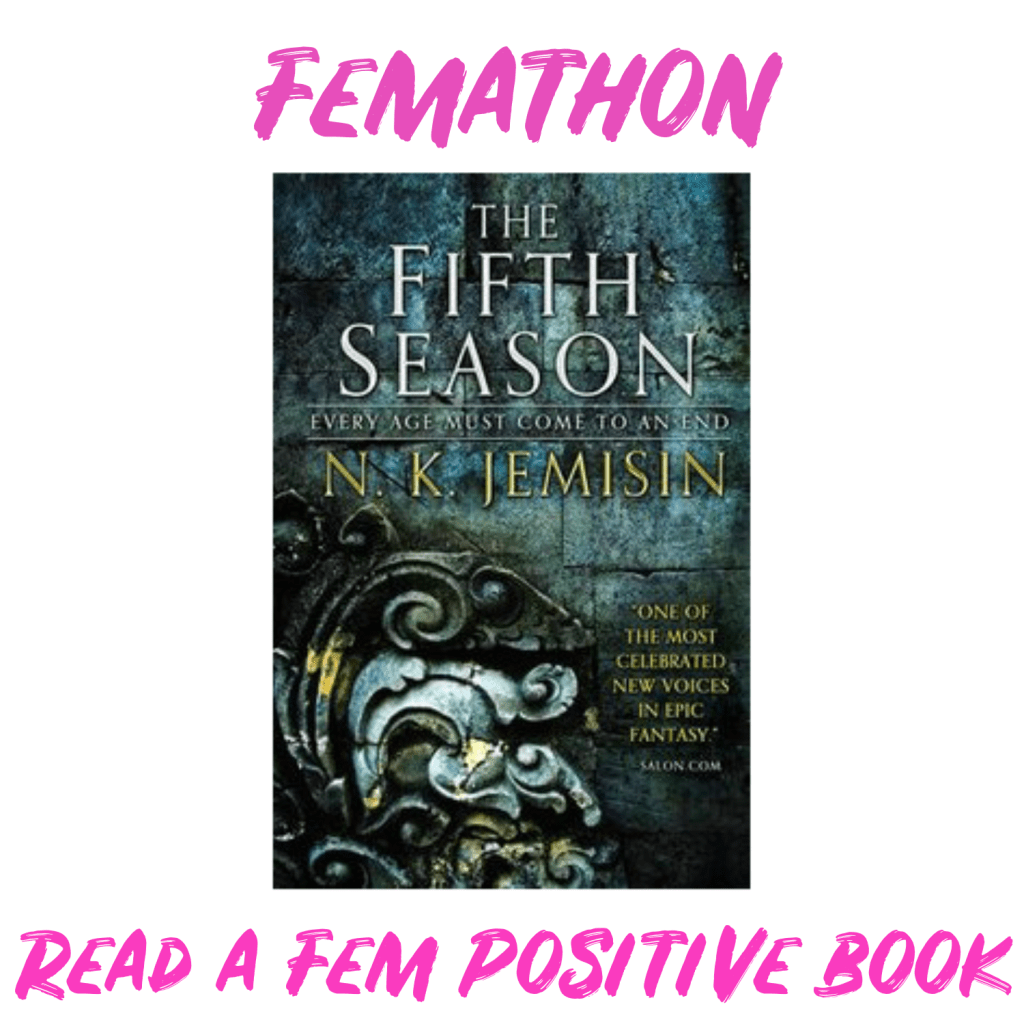
Why wait until this late to bring this up again? Why does Madame Stringent feel this way? We still haven’t gotten an explanation for that even though this point is originally brought up directly after establishing that in this world it is completely normal and acceptable for women not to wear clothes. Why bring this up so much later to remind me of how little sense this made in the first place? It somewhat ties in through the nebula to constellation segue, but it just doesn’t work for me. Had Chapters G and H happened right after he was introduced to the Queen it would have made much more sense.

Our merry group of characters load back up on the spaceship and make it to another planet, which as I’m writing this a few weeks after reading it isn’t all that memorable. And again we see pacing issues with how serious or not things actually are:

As we complied with Tippers’ order, I felt a lump rising in my throat. I knew that, in our situation, “touching down” meant “crashing.” Peering out the window, I could see a planet beneath us growing larger by the second. That must be Fweam, I thought, hoping Gurgatron would be able to find an ideal place on it to land the ship.

If we’re supposed to be worried that the MC is in a state of peril then why would he describe a crashing scenario as “an ideal place to LAND the ship”. Using “land” right after talking about crashing completely deescalates the scenario and makes “crashing” feel completely hollow. Why bother mentioning crashing at all if it’s not going to be a big deal?

And with that I’m leaving off halfway through page 11 of 20 of my notes. Check back later to see what happens in Chapters Aye and J.

Update 4: The Worst Book I’ve Read in 2020

If you’ve missed the original post, check this out first: https://victoriarmendes.wordpress.com/2020/08/30/the-worst-book-ive-read-in-2020/

Also here’s Update 1: https://victoriarmendes.wordpress.com/2020/08/31/update-1-the-worst-book-ive-read-in-2020/ and 2: https://victoriarmendes.wordpress.com/2020/09/01/update-2-the-worst-book-ive-read-in-2020/ and 3: https://victoriarmendes.wordpress.com/2020/09/02/update-3-the-worst-book-ive-read-in-2020/

Did I say check back tomorrow? I meant check back when my wrist decides to get its sh*t back together and I can use my right hand like normal again. Gotta love waking up to random subluxations thanks to EDS. Yayyyyyyyy.

The first notes that I have on Chapter F are from things not making sense about a statement the MC makes:

After all, this voyage had the potential to change all of our lives…irrevocably.

Up until this point the MC has been talking about how little impact this whole shindig is having on him (which is why he didn’t bother to pick up anything from the gift shop in a previous chapter), so why would he now want to stress how life changing this is? If he said something along the lines of “I didn’t realize earlier how life changing this experience would be” then it would make more sense, but there’s nothing leading up to this to see that shift in the MC’s thinking — so this line feels completely out of character. Don’t worry, the next few things he says makes even less sense.

I had been rather surprised when I found out that she was taking this journey with us. Being the Queen of the Cosmos, she was a valuable entity, and I thought it rather reckless of her to be taking part in such a dangerous mission involving extremely unpredictable results. But she had insisted that her presence was necessary, and so I dared not question her.

This is where a content and line editor should have picked up on this and reworked it. By phrasing things this way the MC is clearly questioning the Queen’s judgement, and if the Queen felt the need to explain that her presence was necessary she must have been questioned or noticed some discontent amongst the crew. With a little bit of rephrasing this passage could convey the undertones effectively, but in its current state it’s just confusing. Next we begin to get a picture of who all is a part of this crew:

…the Queen, Qarl, Bobby, Gurgatron, the copilot Tippers, the first mate Quadrell, six alien members of the Empress’s crew, six human members of the Queen’s military (three male and three female), and yours truly. It was an eclectic bunch, one that was sure to bring variety to the trip.

For a sci-fi book, I don’t feel like it’s necessary to stress that a group is eclectic unless there’s some underlying element that would make it a clearly unusual grouping of characters. Because of the way the world has already been introduced, this doesn’t remotely feel out of the ordinary. I view this more as a an out-of-place statement or a missed opportunity. It would have been a perfect segue to include some LGBT+ representation, disabled representation, or just something not previously introduced as totally normal for this world. Strap in, the next quote doesn’t make any sense either.

Tippers was the lone human member of the Empress’s crew. A spunky young woman, she had proven herself as one of the brightest and most skilled space pilots in the region. I learned from Bobby that she was one of the youngest pilots to ever pass through the Academy. She had been personally selected by Gurgatron to help helm the brand-new ship and transport us all safely to Hob.

Why would Empress be italicized earlier but not now? Why is this the only female I’ve heard described by her ability to do things instead of by her body? Why can’t all of the females in this book have been introduced like Tippers? Is she really a member of Gurgatron’s crew since she’s been selected specifically for this mission? Is this the first time any of this crew have been together? Based on this description I would think so, but it’s hard to tell since we don’t really get a look at how the crew interact with each other. Why bother including a detail about a specific crew member at all if being a crew member doesn’t really impact the story at all? Why bother telling me that she’s one of the best pilots around when she isn’t actually about to do any dangerous piloting when that’s Gurgatron’s job as we see next:

… there is always the chance that the craft won’t have enough momentum to break through the atmosphere. If that were to happen, X@X’s gravitational pull would take hold of us the moment we dropped off the edge, whipping us around and smashing us into the underside of the planet. But that won’t happen. Gurgatron is the best pilot around. Don’t worry. … Behind us, X@X grew smaller and smaller until it was only a wedge in our trail.

If X@X is a wedge and they need enough momentum to either leave or be smashed, then would they be smashing into the side of the wedge instead of the underside of the wedge? Is X@X actually a three dimensional wedge or is it a two dimensional triangle? These are the questions my brain gets sidetracked by. In case you didn’t already hate the MC for being physically abusive, you can add mental abuse to that list too:

“Knock off the drama, Qarl.” I scolded him. “I didn’t stop you to talk about this. I wanted to ask you about what the Queen was telling Quadrell.”

For a bit of background, Qarl had been talking about something that was very important to him, and this was the MC’s response. I’m not OK with phrasing like this in a book that is classified as comedy. This language belittle’s the other person’s feelings and is a standard gaslighting tactic. There are much better ways to get a conversation back on track when you’re looking for specific information without gaslighting people. And just a bit after this passage was where I started having immense hatred for Qarl as well — you know how earlier I mentioned there was drugging that’s highly reminiscent of a date rape scenario? That takes place in this chapter too.

Turning back to the window, I was startled by a long blue arm thrusting a vial under me nose. I jerked back with a little gasp. Qarl popped his head up from behind the seat in front of me, a mischievous grin on his face.

The substance being thrust upon the MC is known as “chill-out gas” which the MC has stated he has no interest in partaking. Qarl seems to think he’s playing a harmless prank because it’s just chill-out gas and they’re there to have a fun time. Do I need to go into detail about why this is so many levels of wrong? SOMEONE IS BEING DRUGGED AGAINST THEIR WILL AND THE PERSON FORCING THE DRUGGING THINKS IT’S COMPLETELY FINE BECAUSE THEY WANT TO HAVE A FUN TIME.

And that’s the end of my notes for Chapter F. Check back eventually for more updates as long as my hands decide to function enough for me to type.

Old-Fashioned Pumpkin Spice Bread

photo of pumpkin spice loaf cooling on a rack - the top is very craggily.
Old-Fashioned Pumpkin Spice Bread

INGREDIENTS:
1 3/4 Cups All-Purpose Flour, fluffed then spooned into the measuring cups
2 Teaspoons Baking Powder
1/4 Teaspoon Baking Soda
1/4 Teaspoon Salt, fine ground (like kosher, if sea salt run it through a spice/coffee mill)
1 1/4 Teaspoons Vietnamese Cinnamon, finely ground
1/4 Teaspoon Cardamom, finely ground
1/4 Teaspoon Clove, finely ground
1/4 Teaspoon Allspice, finely ground
1/3 Cup Shortening
2/3 Cup Sugar
2 Eggs, well beaten
1 Cup Pumpkin Puree

NEEDED EQUIPMENT:
1 “standard” sized loaf tin (about 9x5x3 inches or 21x11x6 centimeters), greased
1 electric mixer, stand or hand-held will work
2 large bowls
1 rubber spatula
1 whisk
measuring cups/spoons
cooling rack
optional: an instant-read thermometer

DIRECTIONS:
1. Preheat Oven to 350 degrees Fahrenheit or about 177 degrees Celsius.
2. In a large bowl, whisk together flour, baking powder, baking soda, salt, and spices.
3. In a different large bowl, cream together shortening and sugar using an electric or stand mixer. (Cream meaning to beat it a lot until the color and texture changes to being light and fluffy; with an electric mixer this usually takes a minimum of around 3-5 minutes – technically you can do this by hand, but it would probably take at least 30 minutes [at least that’s what some of my really old cookbooks have told me; I haven’t tried it out.])
4. Add beaten eggs to bowl with sugar and shortening and combine well.
5. Alternate adding flour and pumpkin to shortening mixture until just combined, do not over-mix unless you want the texture to be closer to bread than cake.
6. Bake in a greased loaf tin for 50-70 minutes (until internal temperature registers at least 180F [82.2C] to 200F [93.3C] – once you go over 200F it starts to be very dry/overbaked). You could also just poke it with a knife or toothpick to see if it comes out clean like most people do when checking if a cake is done or not.
7. Let bread cool in tin for 10 minutes then turn out onto cooling rack.
8. Allow to cool at least 45 minutes to 1 1/2 hours before icing or slicing. Enjoy!

BACKSTORY:
I’ve been working on this recipe on and off over the course of a few years, and I’m still not sure I have my holy-grail of pumpkin quick breads yet. I do know that I’ve finally dialed in my optimum spice mix though. The previous iterations used nutmeg instead of allspice, and it was the allspice that was missing. I may eventually add a few gratings of nutmeg back in next time to give it a try, but I’m very pleased with the flavor balance I currently have. This is based off of my family’s old-fashioned banana bread recipe – take out the spices and pumpkin and sub banana and that’s it. I noticed that this batter is a bit tighter than the banana bread recipe it’s based on though. It’s still somewhat moist in the center, but the edges are fairly dry (though that could be because I pulled it out when it temped at 200F instead of 180F). I may eventually play with adding in some buttermilk and subbing some baking soda for the baking powder since the acid in the buttermilk would activate the baking soda. (Baking soda and baking powder are both leavening/rising agents; baking powder is basically pre-activated baking soda. The nice thing about baking powder is that you don’t have to worry about activating it with an acid like you do with baking soda; the bad thing is that it has a little bit of a funky aftertaste if you get too much of it [which isn’t an issue in this recipe – it’s just a technical detail you have to be aware of when creating recipes]). Potentially, the buttermilk could also create a more tender product which would make over-mixing less of a worry for new bakers. In the meanwhile, this is where the recipe is at, and I’m pretty happy with it. If you want you could mix up some royal icing to top it with, but I don’t like it very sweet. If I do add a bit of extra sugar to it once it’s baked it’s usually in the form of a light dusting of icing/confectioner’s sugar on an individual slice.